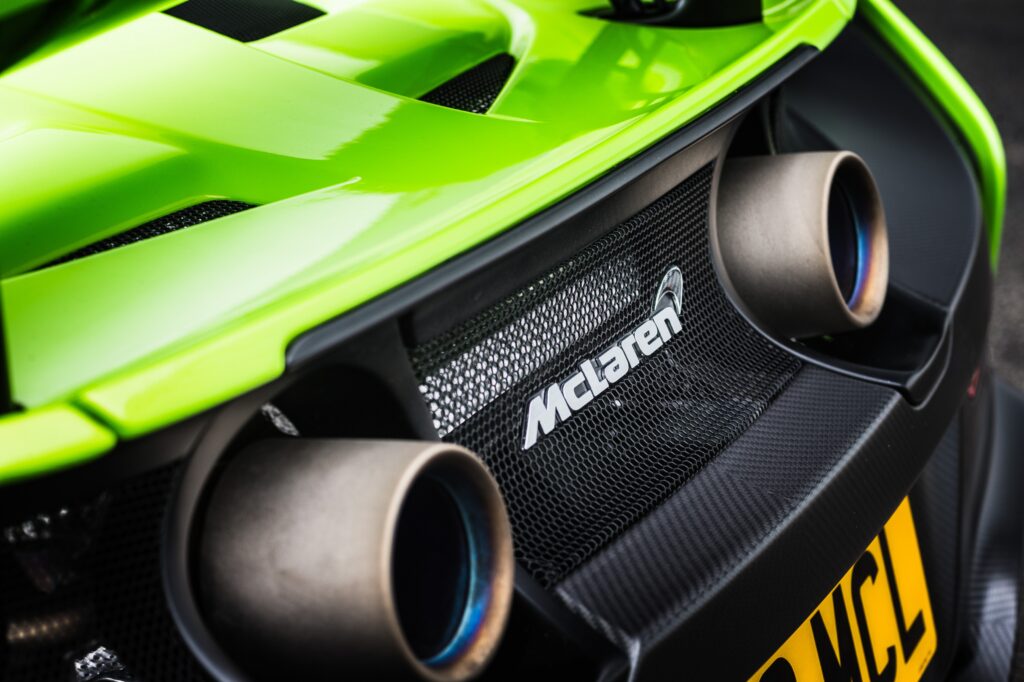
Photos Courtesy McLaren Cars, and SHot by Mark Ewing
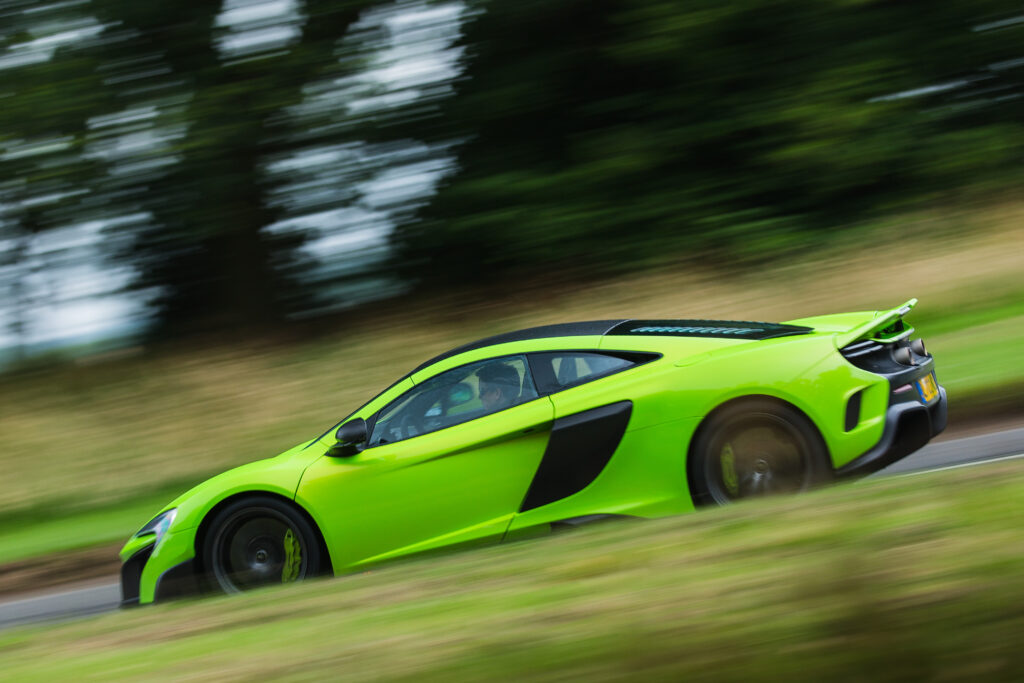
Two hours after the $395,271 Green Monster arrived in my garden, I was presenting it to a former colleague and old friend, a retired professional driver who has pounded all manner of cars down drag strips and around road courses. After a rolling start blitz up a long freeway onramp, he shouted out a string of expletive deletives, followed by, “This must be a ten-second car!”

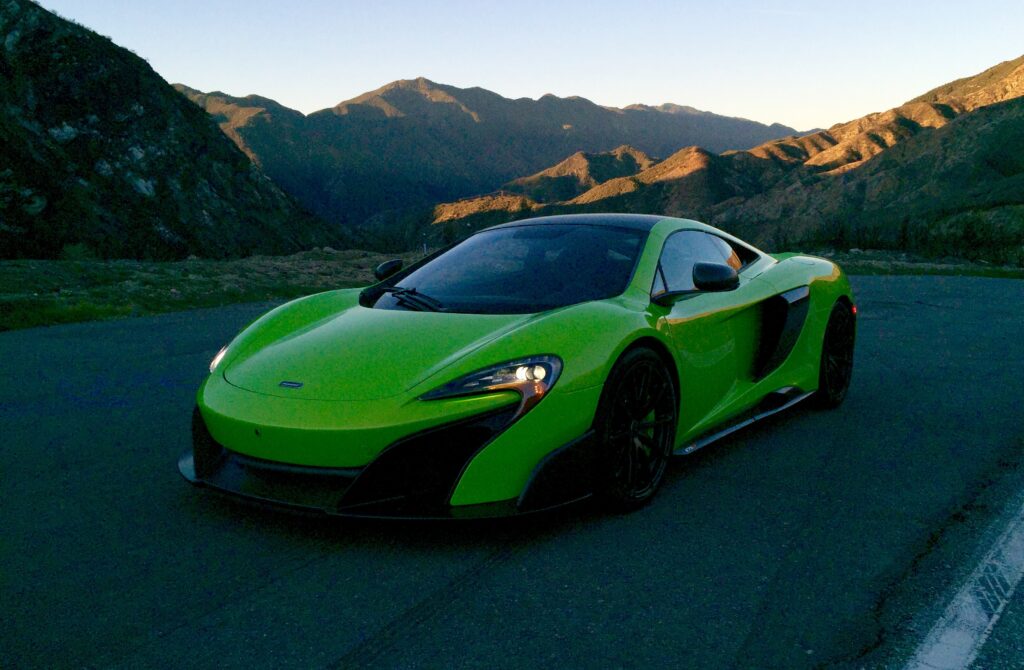
That seat-of-the-pants estimate is accurate. In less than eight seconds the lightweight 675LT “Longtail” is thundering past 125 mph. It’s reasonable to assume 675LT covers the quarter-mile in the low ten-second range; it’s pushing only a few ounces more than four pounds per each of its 666 horsepower. From 50 or 60 mph to any speed I dare not admit, giving it full throttle is like sparking up a rocket strapped to your back. Along with the Ferrari 488GTB I drove over Monterey weekend last August, 675LT is the quickest factory-built road car I’ve experienced.

McLaren reps very nearly taunt people to engage Launch Control, as the 7-speed gearbox and its clutches are engineered to withstand repeated abuse. Puttering in traffic under light throttle, shifts are not quite as smooth as in the gold standard of imperceptible shifting, the Lamborghini Huracán. Launch 675LT full steam ahead and shift action is quick and affirmative.
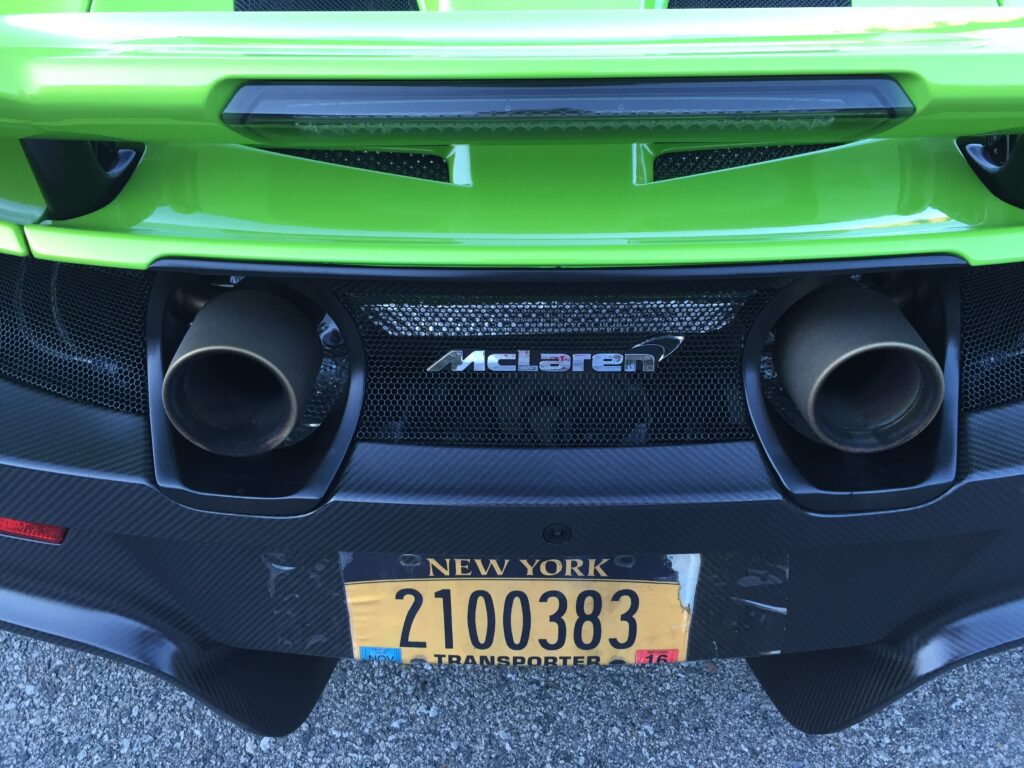
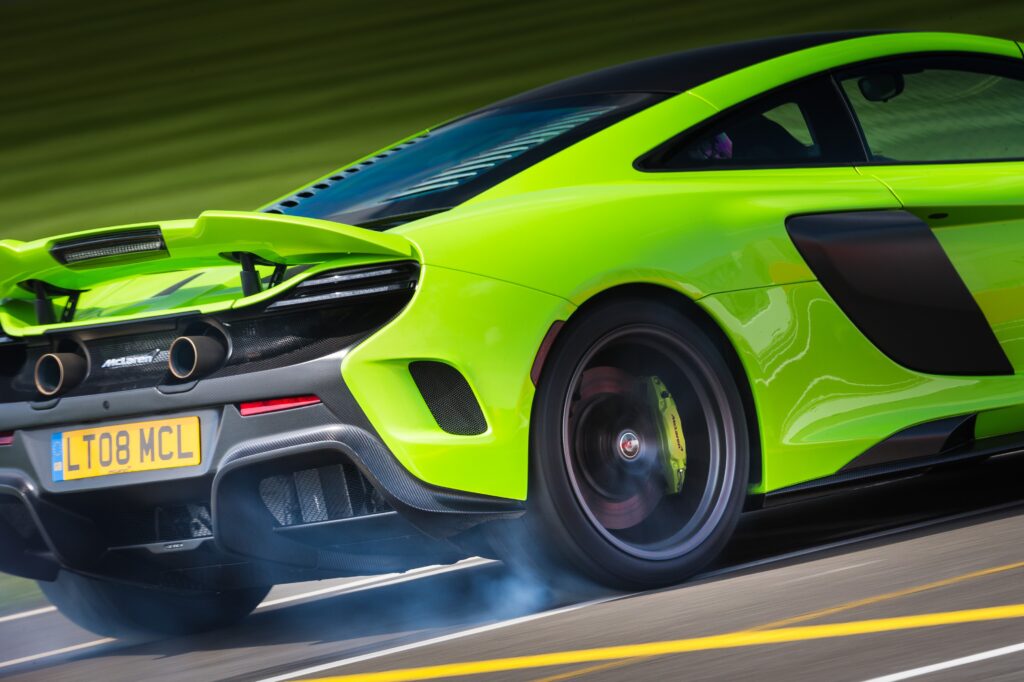
In TRACK mode, 675LT can light up the rear tires when shifting into second gear under full throttle. Engine sounds are not soaring and operatic like in a Ferrari—no one matches Ferrari for screaming sound—but 675LT’s engine and exhaust speak to McLaren’s ancient source DNA, from 45 and 50 years ago when McLaren made its name, dominating the original Can-Am series with 700+ horsepower sports-prototypes. Understanding that how we measure and rate horsepower has grown much stricter, it’s interesting to think 675LT has power roughly comparable to the insanely radical Can-Am McLaren show below. Above 5000 rpm, 675LT’s engine sounds shatter the air, revs climbing almost faster than one can pull the trigger for a higher gear. Longtail has its own booming, raucous song.
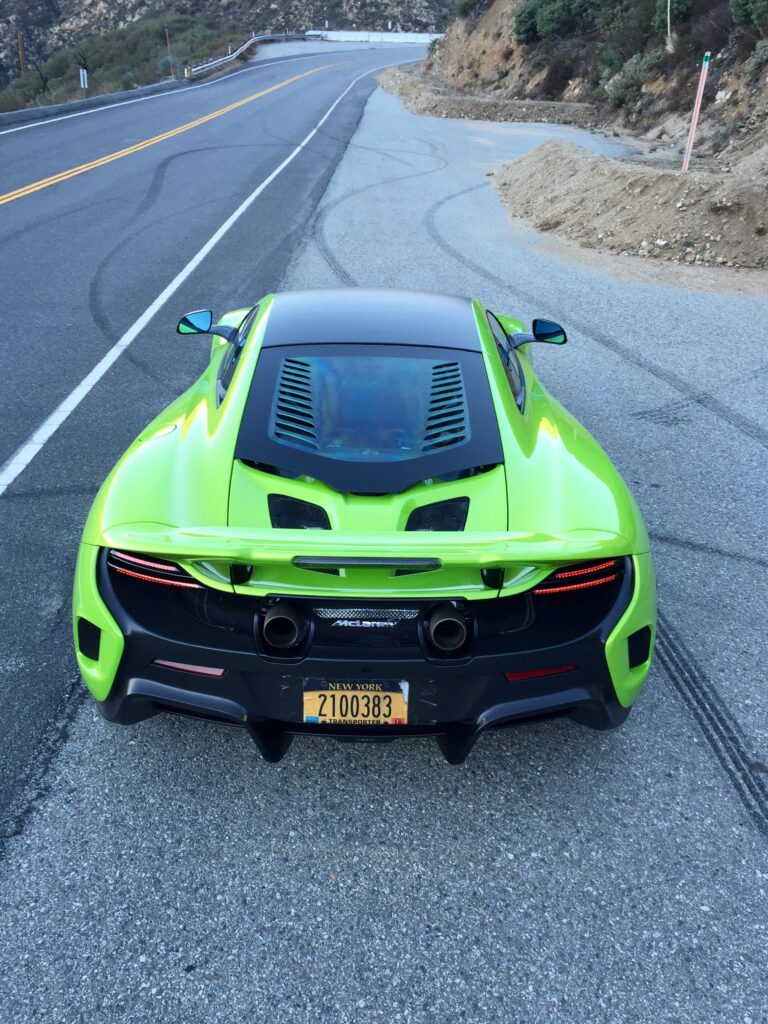
Beyond mind-bending acceleration from any speed to any other speed, what impressed most was Longtail’s civilized ride quality, unexpected and appreciated in an ostensibly track-focused car that many owners will have as part of a collection, and drive now and then on the road. Unlike poorly calibrated and therefore harsh sports cars like the Alfa Romeo 4C, McLaren’s suspension delivers a surprisingly supple ride over a wide range of road surfaces. Yes, it’s busy over grooved freeways, with tires grumbling and expansion joints, patches and bumps making themselves known, but an owner in Malibu or Pasadena can enjoy a weekend trip to Santa Barbara and not be frazzled upon arrival, or suffer an irate companion. Longtail performs ably on road and track.
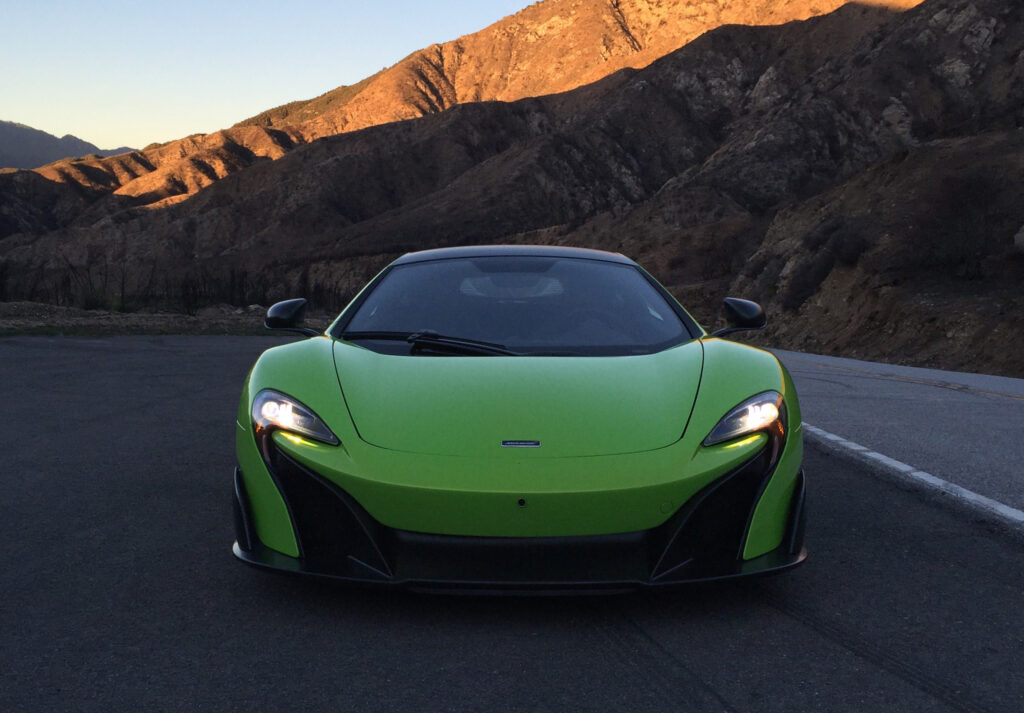
On the creamy asphalt typical of California mountain two-lanes, 675LT glides, the ride quite good, leaving one to focus on driving quickly without physical suffering. It’s not a Rolls, but a one- or two-hour blast will prove enjoyable, though a breakfast stop appeals after 90 minutes in the saddle, to savor the experience with a cup of coffee just after dawn.
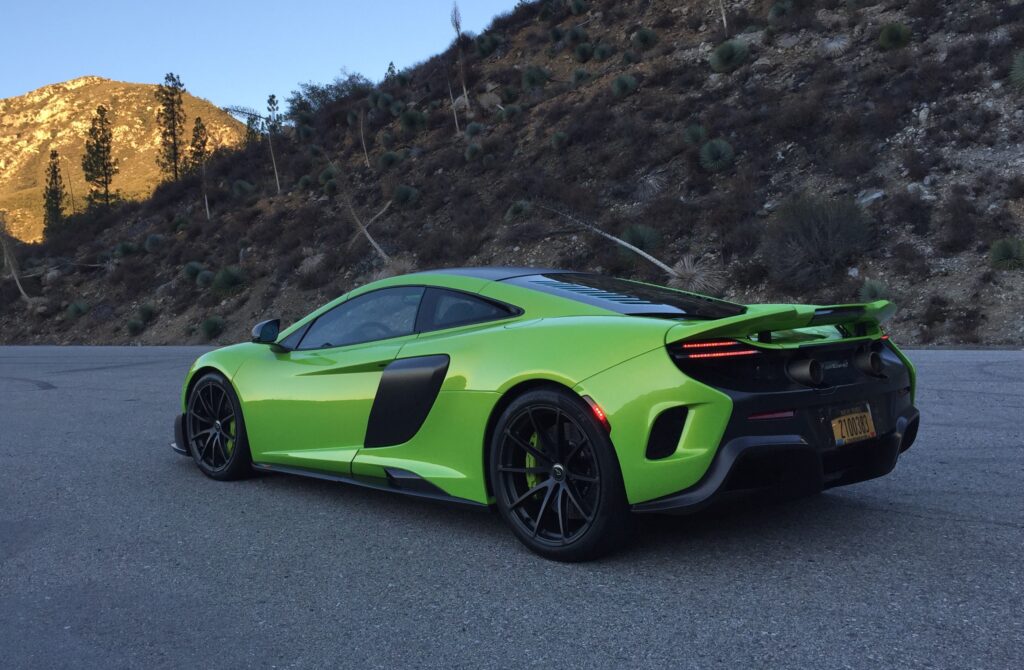
675LT has light steering. Not because it’s over-boosted and thus lacking feel, but because little more than 42 percent of the car’s weight sits on the 235/35-19 Pirelli Trofeo front tires. Steering is communicative yet free of shock, like in a Lotus, which is high praise. Much about 675LT’s suspension and steering is based on lessons learned with the P1 hybrid supercar. If the English deliver a secret sauce, it’s steering and chassis. Longtail steering is artful, encouraging the driver to be subtle and gentle amidst sound, speed and fury, necessitating a serenely Zen presence of mind. For a short section, I pushed the transmission into neutral and coasted down a steep section of mountain with long, open bends. Longtail’s ride was smooth, with little suspension noise, and the steering was truly something to remember. It made a fine Soapbox Derby car.

Without the densely padded power seat of the 650S, which limits room and thus comfort for anyone much over five foot ten, the cockpit suddenly becomes a driver’s paradise even for big oafs like me. I did not slide the seat back all the way to the stops, and had several inches of headroom. High-sided and thinly padded racing buckets are not for all-day comfort, but they allow tall guys to fit the car.

My old chums who sampled early McLarens four years ago did not like the mouse fur carpeting; they will be pleased to find composite footwells with tidy snap-on mats. Excepting ten minutes in the garden to fiddle with buttons and explore track-day lap-recording functions, I never turned on the Meridien audio system. If you must, plug in an iPhone for mood music on that weekend drive from the Bay area to a Sonoma Coast B&B.

For 2016, McLaren shifts marketing emphasis to the 570S, to establish it as the kinky English alternative to a Porsche 911 Turbo S, Lamborghini Huracán, and a heavily optioned Mercedes-AMG GT S. Coming out of the stratosphere where there’s plenty of market white space, McLaren will have its work cut out against the Germans. Running parallel to 570S market launch, McLaren will probably develop a successor to 675LT, but its arrival will be timed so a new car does not bludgeon value of the LTs already built.

Considering the 1000 675LTs in coupe and spider form represent at least $800 million in sales revenue, and McLaren has gained what I can only assume are 1000 happy clients, “Longtail” is a golden goose McLaren should protect, not oversell. With demand for 675LT so high—the second batch of 500, in open spider bodywork, sold out in two weeks—675LT will join the P1 as a 21st Century McLaren that resists massive depreciation with unhappiness among owners. The 570S will be leased, a wise financial safety net under early adopters.

Thanks mostly to P1, in 2014 McLaren earned roughly $30 million in profit, a small figure compared with the hundreds of millions Ferrari and Porsche generate each year, but start-up McLaren Automotive has a floor beneath it. Admittedly, to Ferrari and Porsche, McLaren is a tiny speck on a distant horizon, but let’s remember that speck is an English pirate ship with its sails now properly trimmed.

McLaren has a global dealer and service center network and is running a second shift gearing up for 570S and completing the batch of 500 675LT spiders. Due to added workers and development costs, 2015 will be far less but still in the black.
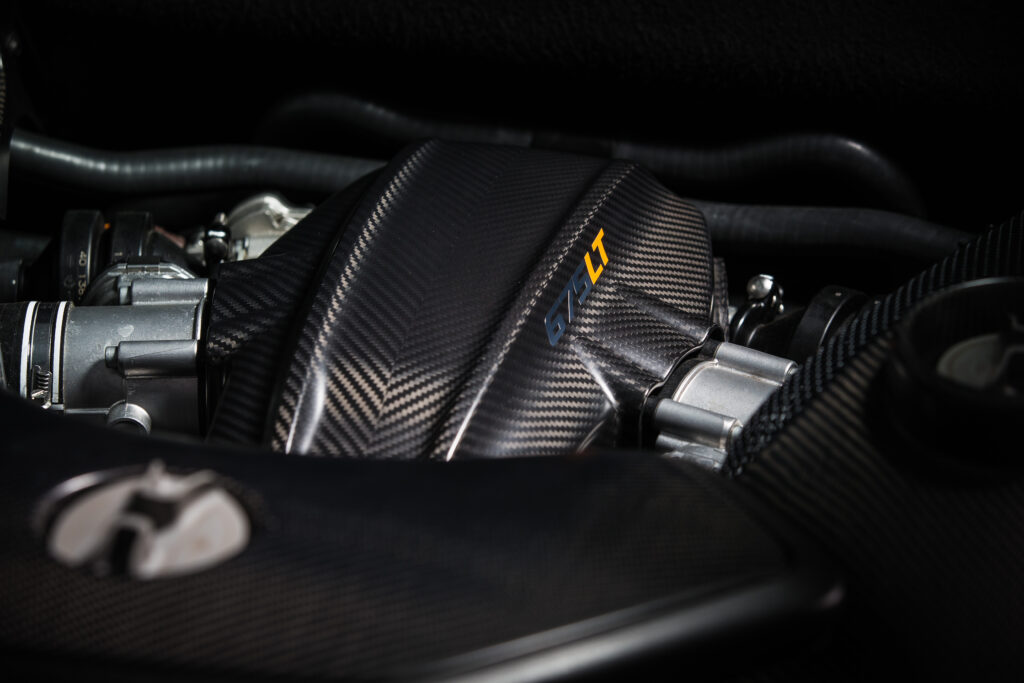
McLaren’s biggest development challenge will be differentiating three lines of vehicles based on versions of the same excellent carbon-fiber chassis. Distinct bodywork is the logical and easy step, but McLaren must evolve beyond one twin-turbo V8 in different flavors, an effort that could take years. It’s wise to remember that in the late 1950s and early ‘60s Ferrari was reliant on variants of a 3.0-liter V12. Will McLaren build a tiny sub-2000-lb. elemental sports car for track days? A mid-front-engine four-door coupé/CUV to bring greater profit? How do they top the P1? I would not have said it 18 months ago, but I’m looking forward to witnessing McLaren’s evolution.