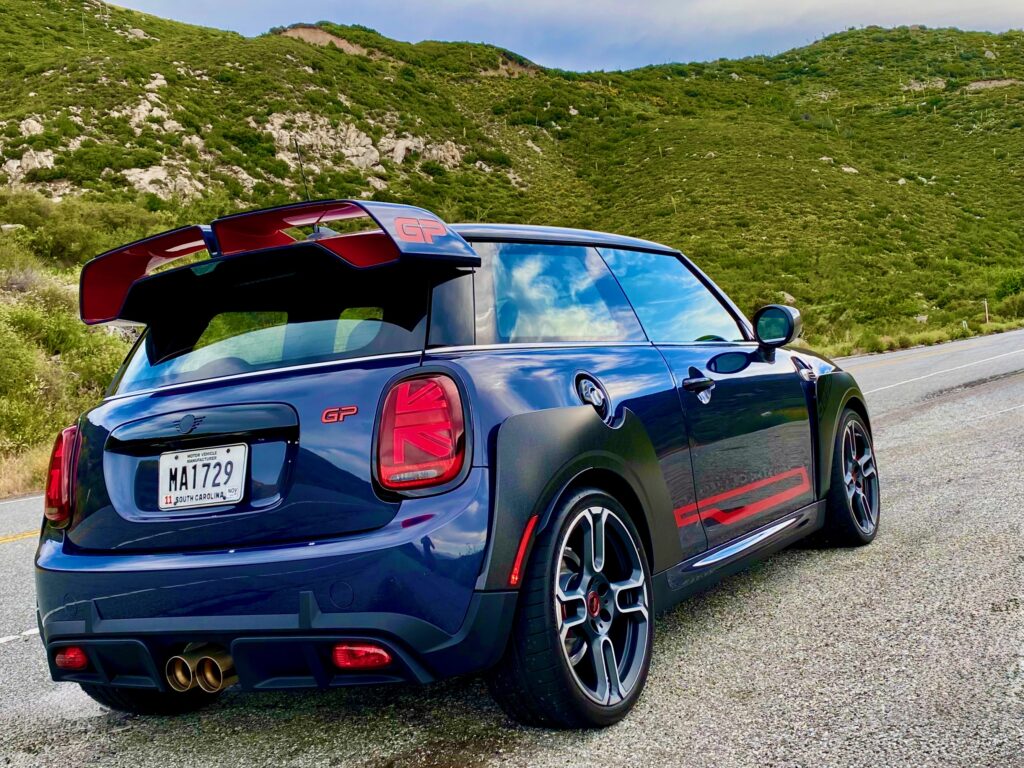
MINI generously offered this car to test drive during the very worst of the COVID period, summer of 2020. Southern California canyons were empty, allowing for enjoyable drives any time of day. I didn’t have to wake up well before dawn to reach empty canyon roads. Yes, a long time ago both on the calendar and in memory. But this car stands out as the best MINI since the original Frank Stephenson designed MINI Cooper S introduced as a 2002 model. This BMW-era car should find its way onto auction blocks at Monterey and Amelia Island in time. MINI JCW GP is a factory-built hot rod, a European tuner car. The 2020 story begins below.
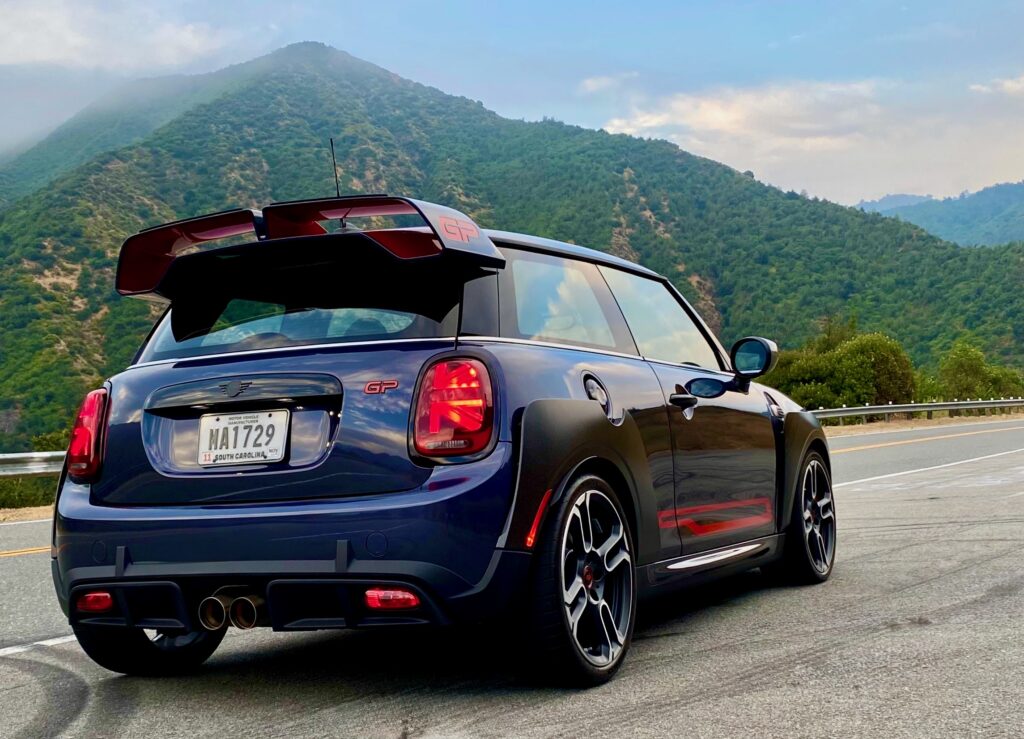
MINI is offering 3000 individually numbered John Cooper Works GP 2-seaters for 2020, rapid little cars that extend a tradition reaching to the John Cooper Austin Minis that won the Monte Carlo rally three times in the 1960s. For MINI GP, BMW wedged the most potent version of its corporate 2-liter turbo engine into its smallest architecture, then added cornering, braking and most obviously legit high-speed aerodynamics to deliver a tidy, balanced road car that’s competent on-track, too. GP is the MINI for the red-blooded fringe, validating the basic goodness of all MINIs. MINI GP is the Olympic athlete giving testimony to the robust DNA of a handsome family.
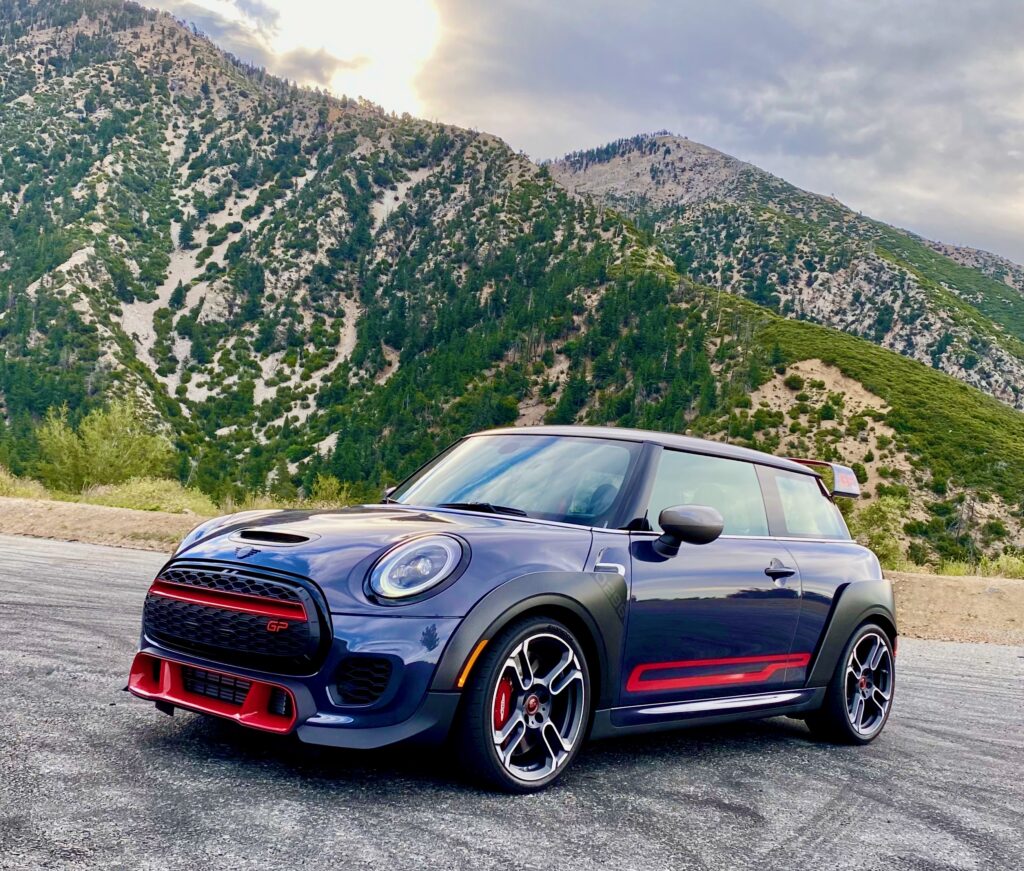
Built in a limited run of 3000, MINI JCW Grand Prix emphatically refutes the argument that we will soon reach “peak piston engine,” that western man has run out of ideas for the gasoline engine. Far from it.
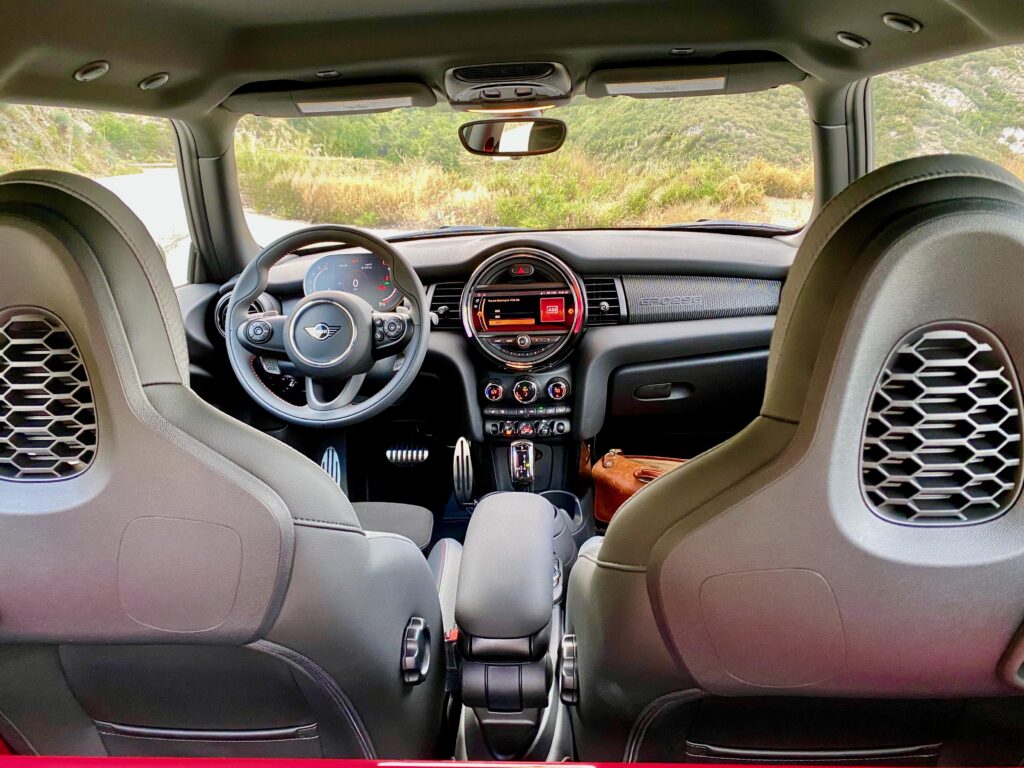
On a mountain road in the right hands, this stubby front-drive 2-seater will leave behind supercars from the early 2000s, achieving speed with incredible ease. It’s not the fastest-ever street-legal front-drive car—front-drive lap honors at the Nürburgring belong to a one-dimensional track car at the time of writing—but MINI GP is rapid while retaining balanced on-road manners. Feel the car leap from 70 or 80 mph to far beyond 100 and you’ll snort, “Peak piston engine, indeed.

Into the smaller MINI architecture, BMW wedged the most potent version of its corporate 2-liter turbo engine, known for duty in the BMW M223i, X2 M35i, and in the larger JCW Countryman and Clubman.. It’s a textbook example of stuffing the bigger car’s engine into the smaller car where it becomes the little engine that could, can and will.
Compared to the JCW MINI hatchback, the GP has an additional 75 horsepower. Moving pieces are modified, and most importantly BMW’s signature twin-scroll high-pressure turbo is evolved along with powertrain scripting. If only a market existed in the U.S., this engine would find ideal application in an ultra-lightweight, diminutive mid-engine sports cars—think BMW or MINI interpreting a Lotus Elise. MINI GP’s engine is glassy smooth in its ferocity.
Delivering maximum torque from 1750 rpm to 4500, this little tea pot is on the boil almost immediately. Pulling away from a stop, the engine turns from dull-witted to spectacular a mere blink after squashing the throttle. From 5 mph up, it’s spectacular. There’s no dead spot across a 4500-rpm range, just relentless urge. The engine doesn’t rev terribly high and doesn’t need to because…turbos.
Like all the best current turbo engines—from the other Germans, from Ferrari—it is nothing like turbos of the late 1990s and early Noughties, with laggy dead space below 3500 rpm. For best effect around town, tramp the throttle then sidestep the brake.
Purist vehicles are coming back into fashion, and in MINI GP the gearing and performance of the 8-speed paddle-shifting gearbox is less about sprinting away from stoplights and more about performance between 30 mph and perhaps 120 mph, the range one normally enjoys on runs through California mountain canyons and hill country across the US. So rapid is GP on the hunt, it can catch you out and remind you to pay attention.
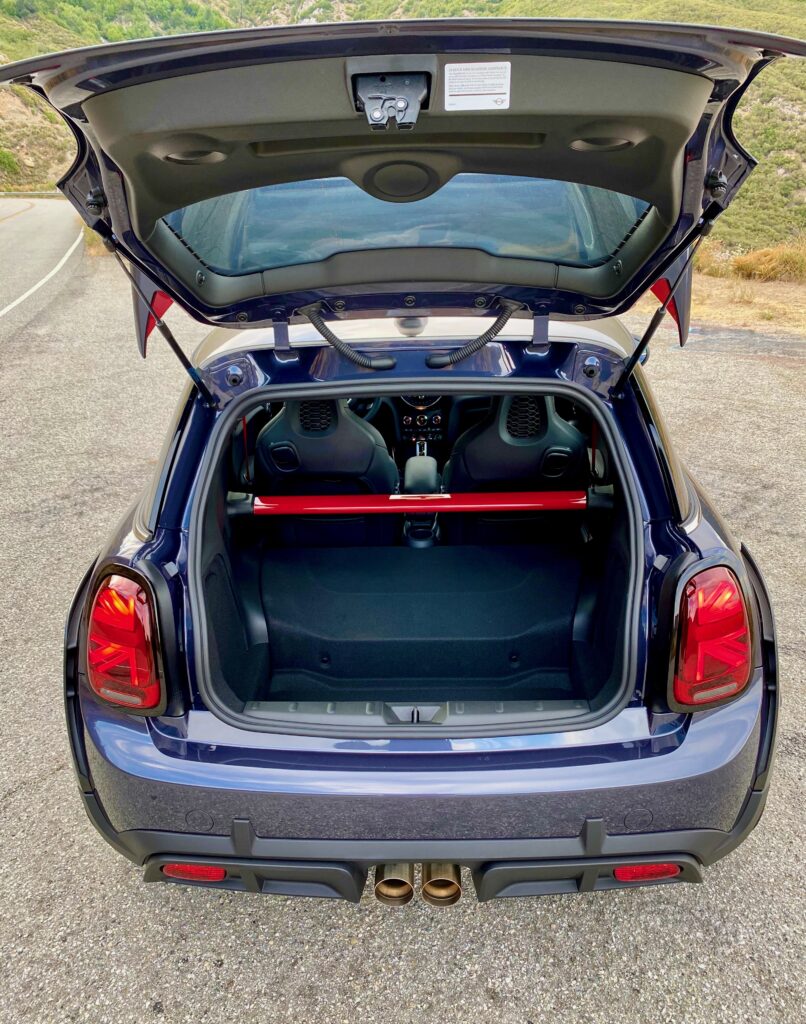
To put all that power on the ground, MINI adopted a locking differential. Mash the throttle at 70 and 80 mph and MINI GP will ever so slightly torque steer, meaning it will pull to one side, requiring steering correction to maintain the desired line of attack. Pay no attention or get in too deep, and you can find yourself changing lanes, such is the strong pull. Here again, that sage comment from German F1 and Le Mans racer Hans Stuck applies: “When you drive, DRIVE. Hang up the phone.”
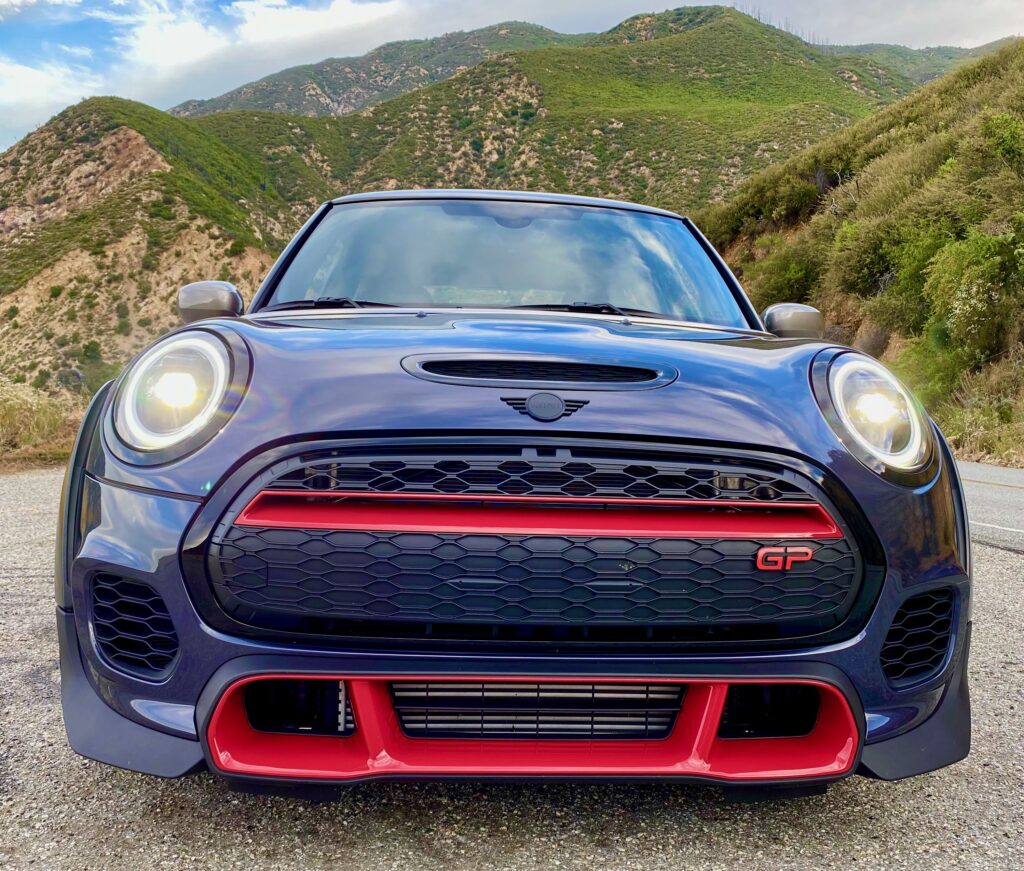
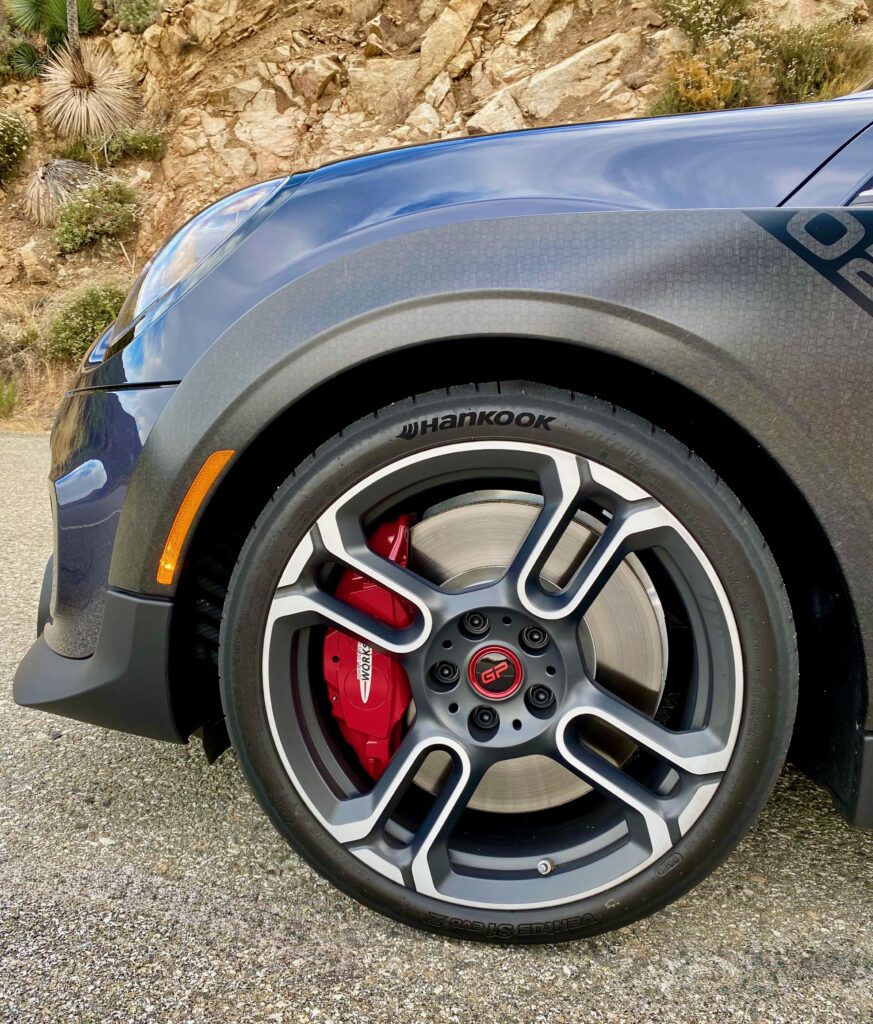
Feedback to the steering wheel from the extra-gummy Hankook tires enlivens the experience but reminds that this is no place for fops or fools. Either drive with style or go sip an Appletini and leave this MINI to people with gristle in their wrists.
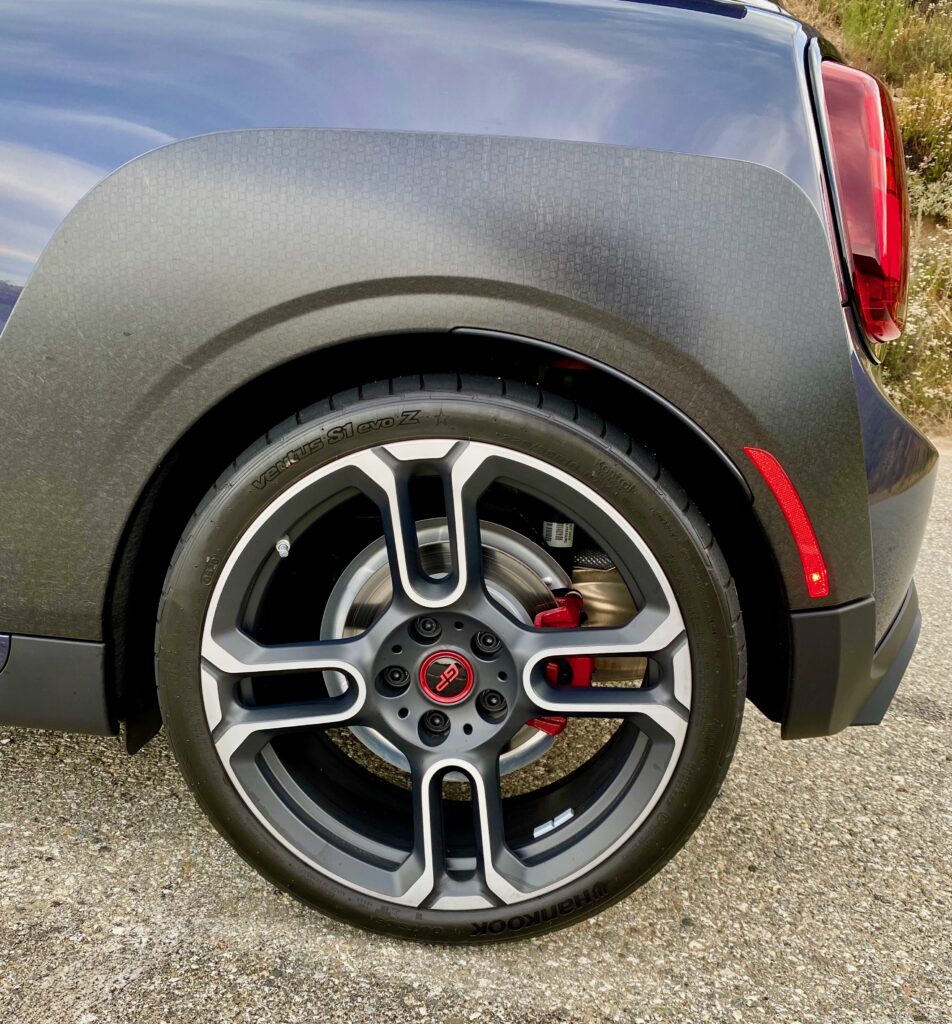
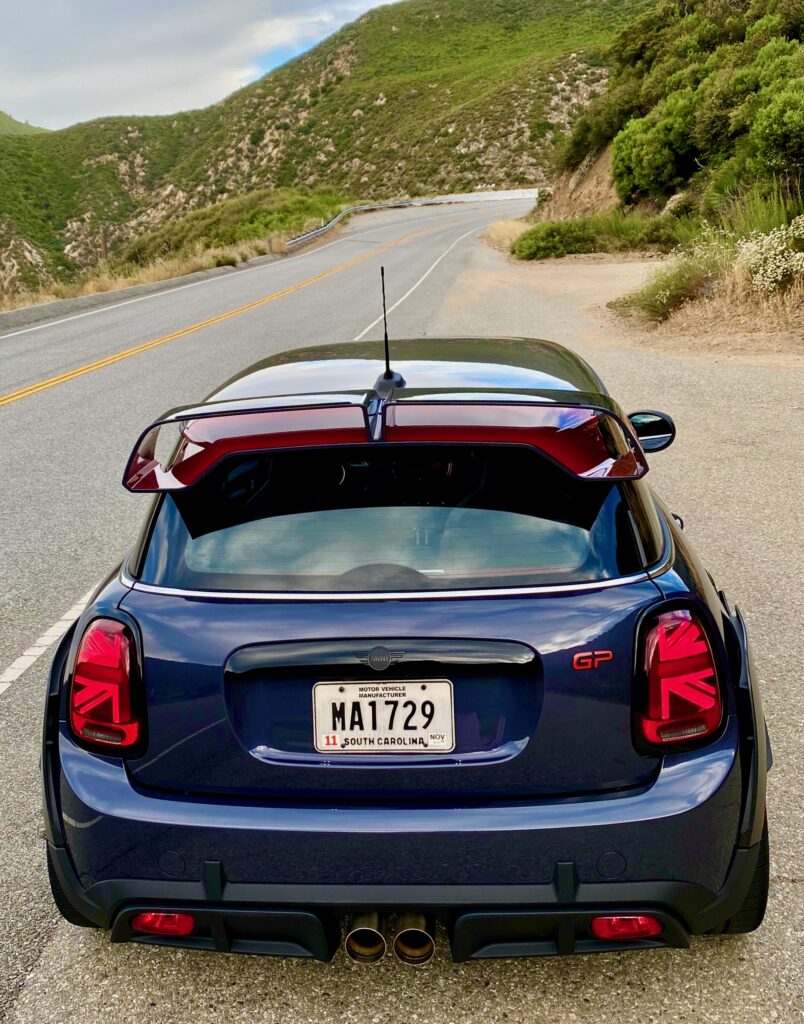
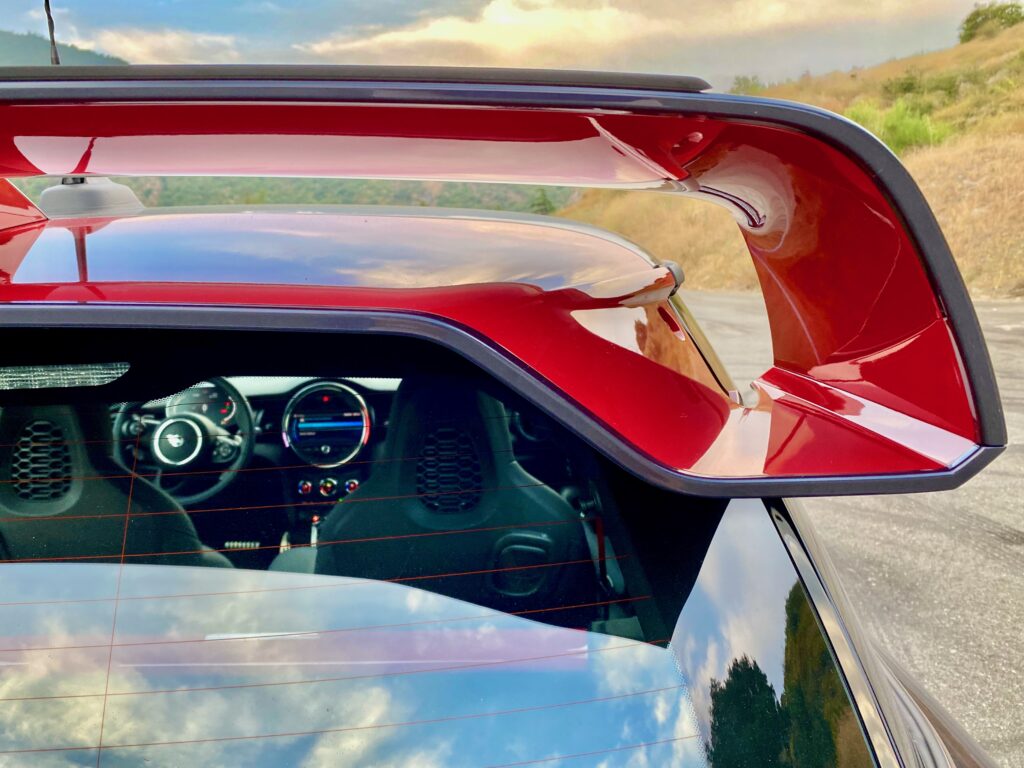
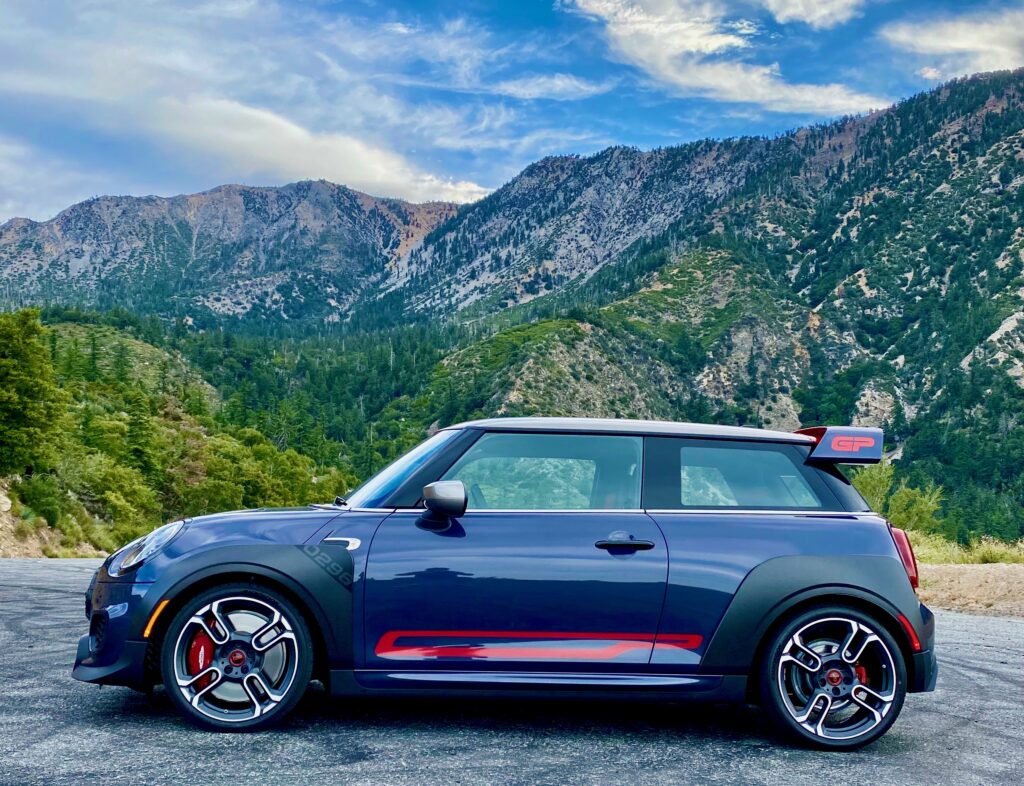
The aerodynamic addenda is real, not 1970s Disco accoutrement that does nothing beyond the parking lot. The barge boards around the fender wells guide airflow, cooling air to the brakes and the rest adhering to the slab sides to enhance stability at the extra-legal speeds. And that wild bowtie roof spoiler is a clean plug-and-play solution, bolting tidily at the rear roof cap. The aero is legit.
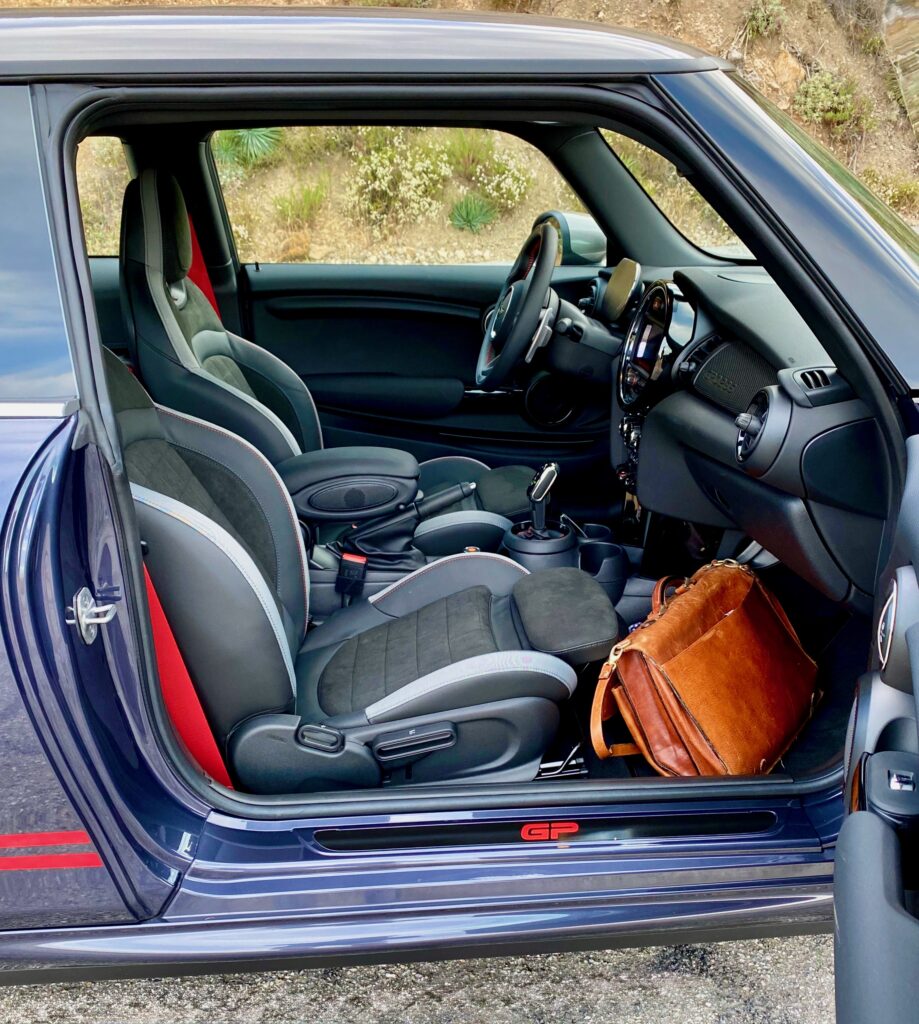
MINI has two platforms, the larger vehicles like Countryman and Clubman built from the same “engineering toolkit” as the X2 and X3, big enough to package all-wheel drive. The dedicated small MINI platform is plumbed only for front-drive.
MINI has a short wheelbase, about 6-7 inches shorter than its main track toy rivals. In brevity we find both character and limitation. In cornering, MINI GP informs the driver it is working up on the balls of its thickly muscled but very short legs. The short wheelbase likely gives advantage to rivals in long, higher-speed corners. Honestly, I’ll take the visceral excitement of the MINI wanting to pivot.
To support that argument, look no farther than BMW’s M2 coupe, which has a longer wheelbase and thus superior high-speed handling compared with its precursor, the stumpy 1M Coupe. For most of us, it’s the sense of excitement and exhilaration that a car brings, not absolute speed.
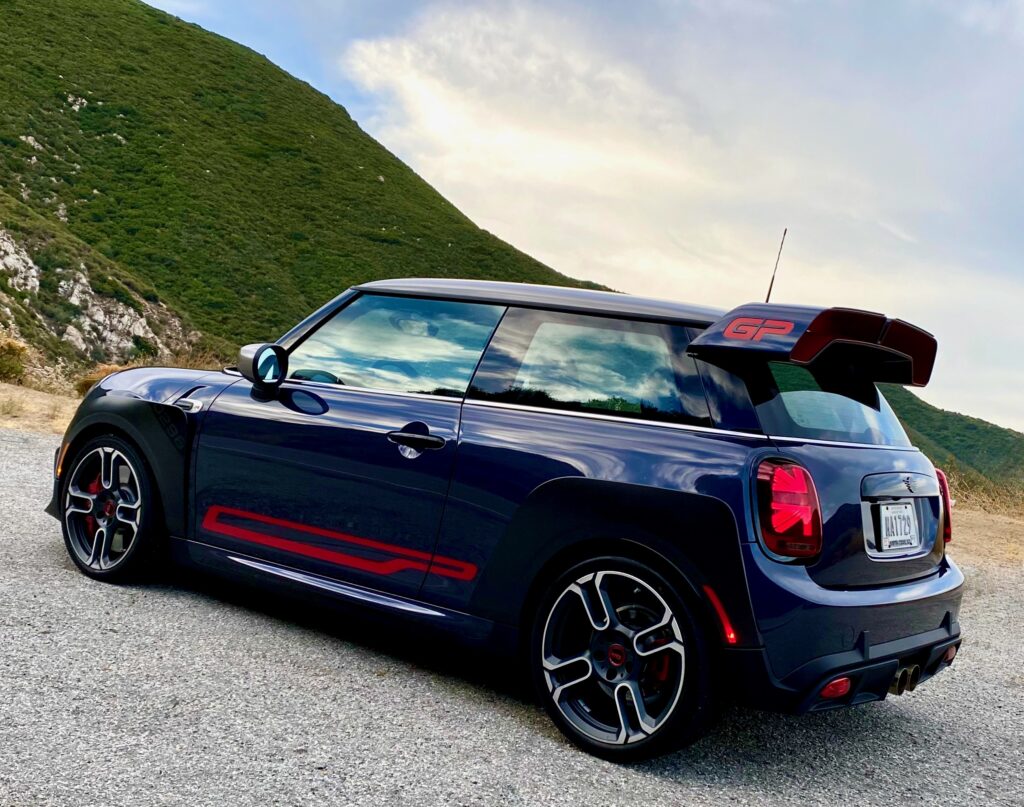
That short wheelbase brings one other forced compensation: MINI GP bunny hops over highway expansion joints, where an overpass or curving onramp meet the main highway surface. In Full Attack mode—would you choose anything else?—the chassis will hop forcefully enough to wiggle the intestines. The answer is known to anyone who races, to anyone who has driven vintage tuner and sports cars: brace the knees for those moments, perhaps even lift the hips ever so slightly out of the saddle. It’s a wonderfully vintage echo of original European tuner cars, tiny 1960s sedans and coupes. The bunny hop is amusing, so removed from the robotic supercars that go so fast but do not always provide a sense of fun and games. If you want to go fast, perhaps you should work for it, just a little.
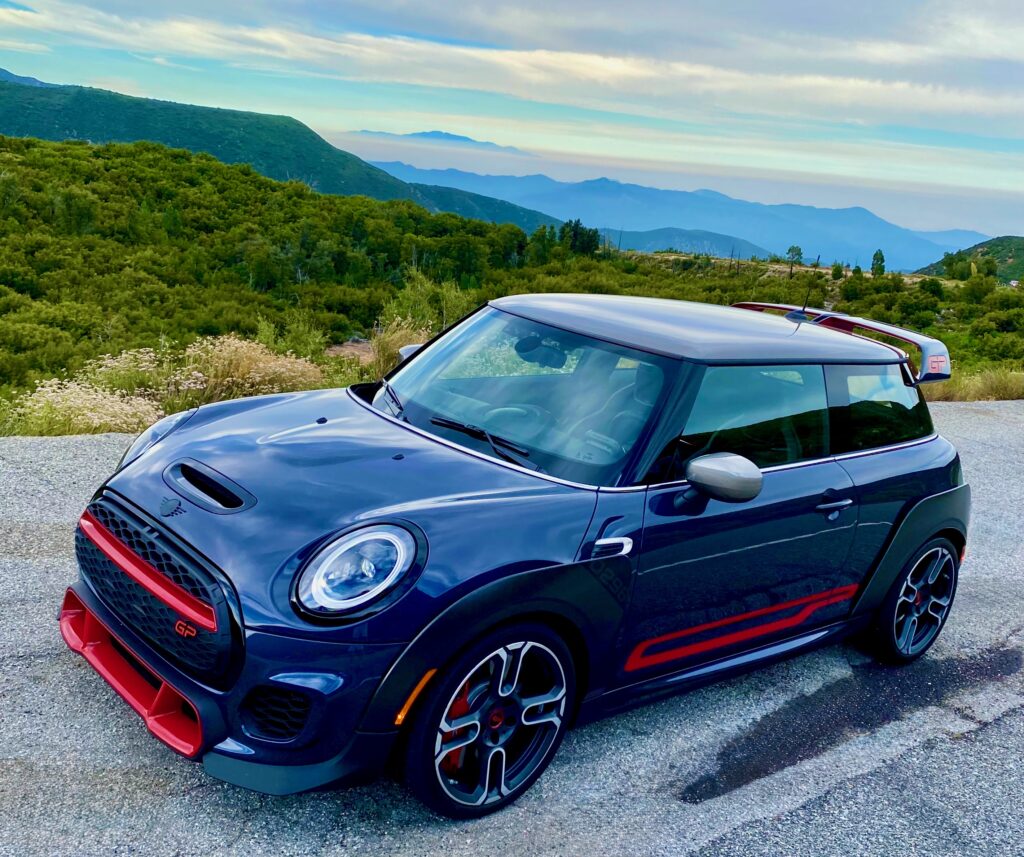
MINI GP is marketed as a track car, yet it’s on a mountain road where it shows it’s not one-dimensional, but instead a balanced, poised, and thoroughly entertaining road car.