Bruce Wayne is without question the most swingin’ bachelor in Gotham City, a cerebral guy whose family firm, Wayne Enterprises, develops advanced civilian and military technology, some of which informs the suite of late-night crime-fighting tools employed by Bruce’s deadly alter-ego, Batman, the Dark Knight. First introduced in the 1930s, Bruce Wayne was the original superhero powered by advanced technology.
Warner Bros. owns the Batman franchise of DC Comics. Thanks to a century of movie-making, Warner Bros. also owns iconic characters and storylines that lend themselves to branded luxury goods.
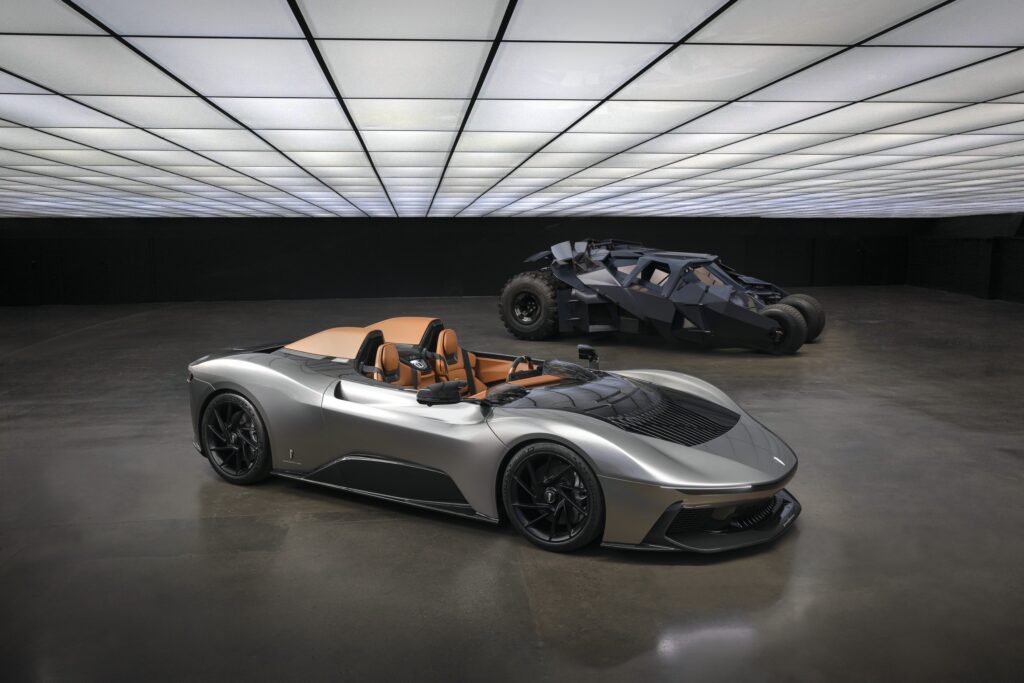
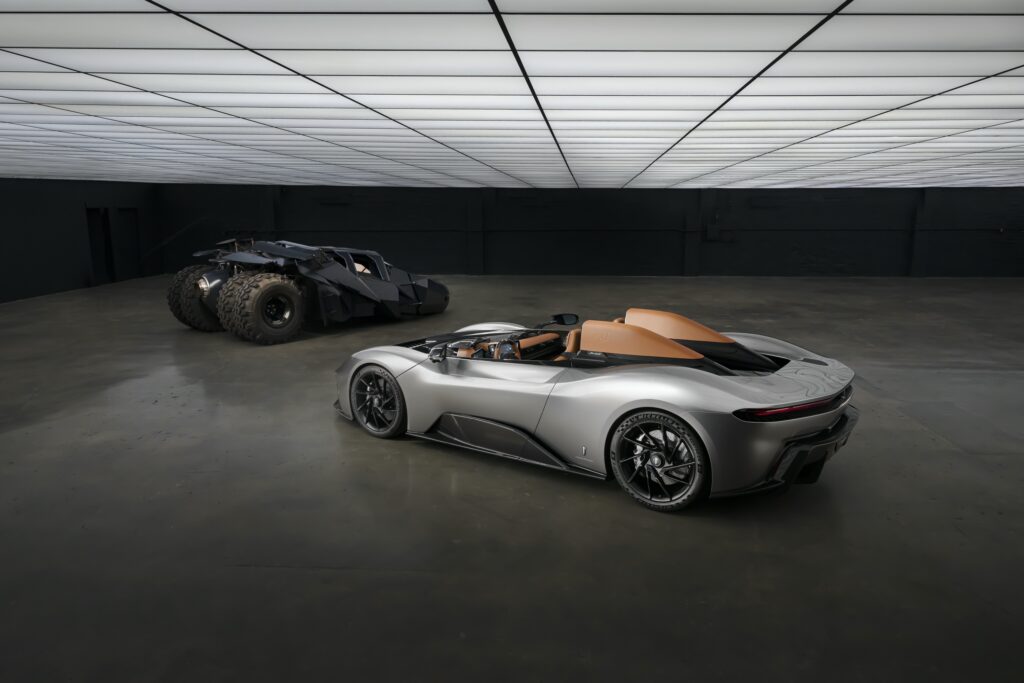
Warner Bros. Discover Global Consumer Products has partnered with Automobili Pininfarina and Relevance International to develop a batch of four one-of-one battery-electric hypercars that reflect the bon vivant lifestyle of Bruce Wayne and the coolly menacing Dark Knight esthetic of Batman.
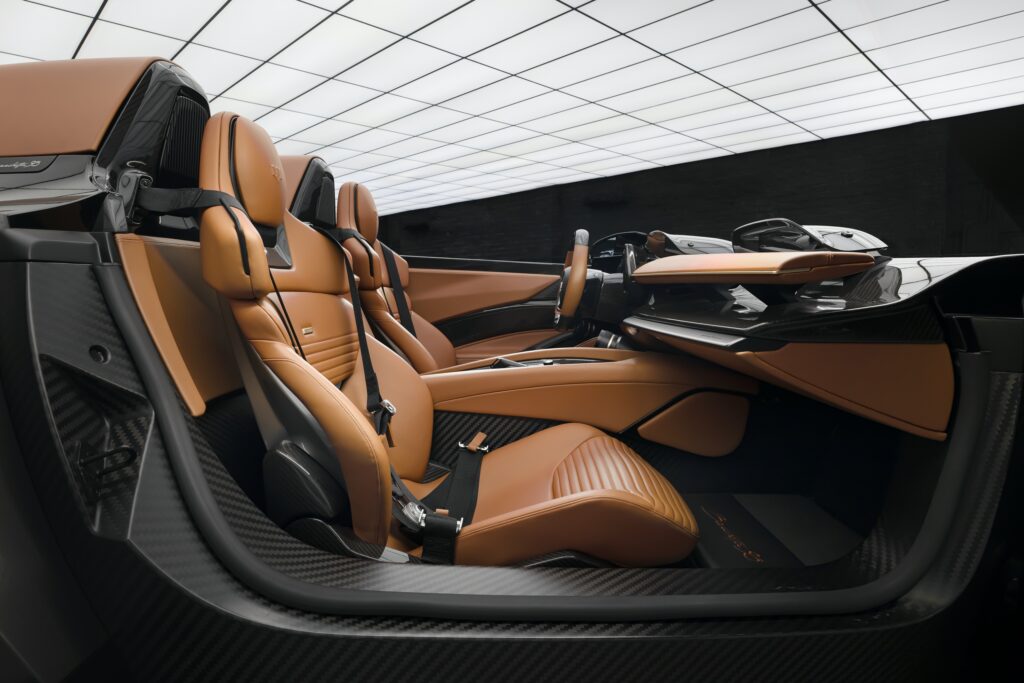
At Quail Lodge this coming week, Automobili Pininfarina will offer one-of-one Batman and Bruce Wayne versions of both its foundational hypercar, the Battista, and its second car, the B95. The “B” stands for Barchetta, which is pronounced BAR-ketta, Italian for little boat, a nickname applied to small, pure Italian roadsters that have no provision for a convertible top. Channel your Inner Bruce Wayne, throw down a few million and you will be the one-of-one owner.
Both Battista and B95 employ variations of the 4-motor battery-electric powertrain the boys of Cambiano developed in partnership with everyone’s favorite heir to Nikola Tesla’s Electric Throne, Mate Rimac.
Battista and B95’s four electric motors—one for each wheel, with two up front, two in the rear—generate an astounding 1726 lb. ft. of instant-on torque, which equates to roughly 1900 electric horsepower.
Automobili Pininfarina CEO and engineering boss Paolo Dellachà finessed the black box controls to put all that power to the ground in a useful and controllable fashion, and guided development of the carbon-fiber backbone and also suspension architecture.
Both vehicles can leap from standstill to 60 mph in under two seconds in the Furioso setting, something I experienced back in 2022 at the launch of Battista on the canyons above Malibu. From that experience, I know that a taller man like me can find comfort in both cars, and that the chassis dynamics are stiff but well sorted, in great part because CEO Paolo Dellachà spent years honing his craft with Ferrari and Maserati.
Battista and Barchetta will appeal to those whose minds are open to a world beyond pistons and turbochargers, to those who embrace electric propulsion. Because its lithium-ion battery pack is sandwiched between upper and lower cooling systems, keeping the cells always within optimal temperature range, Battista and Barchetta do not require a dozen radiators with active aero vents and complex cooling channels, as many mega-horsepower piston-driven hypercars do.
Battista reclaimed the ancient beauty of Pininfarina’s moving sculptures chiseled for so many car companies, including more than a half-century as the preferred body designer for Ferrari. Battista, and the Barchetta, possess the flowing, graceful curves that defined Pininfarina sports cars in the 1950s, ‘60’ and ‘70s, curves that remind of so many of the female athletes we have seen at the Paris Olympics these past few weeks. Those first few decades following World War Two are considered by many the Golden Era of the sports car. But we currently live in a new, tech-infused Golden Era of performance cars and exotic sports cars, a new Belle Epoque of automotive design and engineering.
It remains my opinion that any collector of supercars needs at least one electric hypercar, if only as a measuring stick of all acceleration. Because simply put, no piston-engine hypercar can hope to match the effortlessly violent acceleration of a battery-electric hypercar.
For me, the Battista and Barchetta are both so beautiful, so classically elegant, that they will prove a good return on investment in decades to come. Dave Amantea, who leads Automobili Pininfarina design, has gifted both vehicles with exterior shapes that are best captured with that very old 1960s term: sexy. Amantea has rejected and abandoned the Brutalist forms that are sadly so commonplace these days. Battista and Barchetta have the feminine curves an Italian sports car should possess. From the Golden Age of cinema, think of those Italian bombshells: Claudia Cardinale, Sofia Loren, and Gina Lollabrigida. Yeah, those kinda curves.
Battista and Barchetta are perfectly suited to both Bruce Wayne and his glamorous approach to romancing ballerinas and supermodels, as well as the Dark Knight’s deadly late-night action.
This first appeared on a major dot.com and has been tuned up for posting on my own archive site.
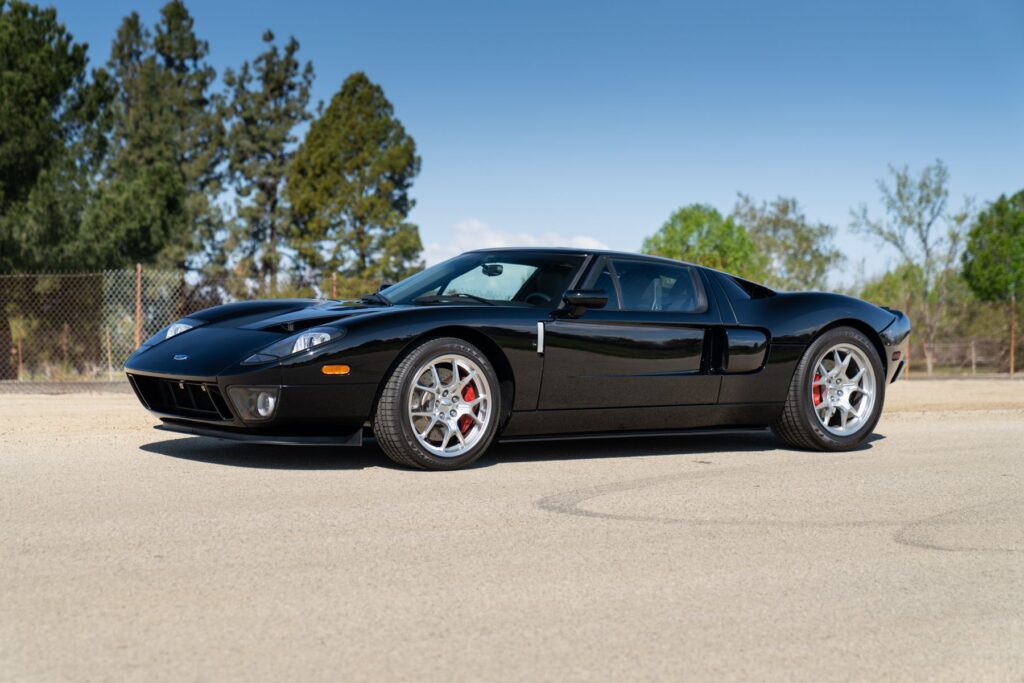
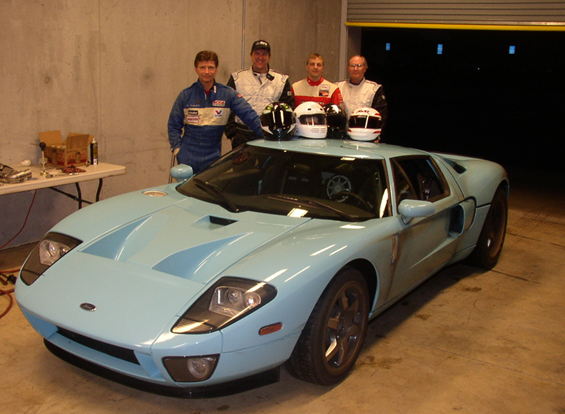
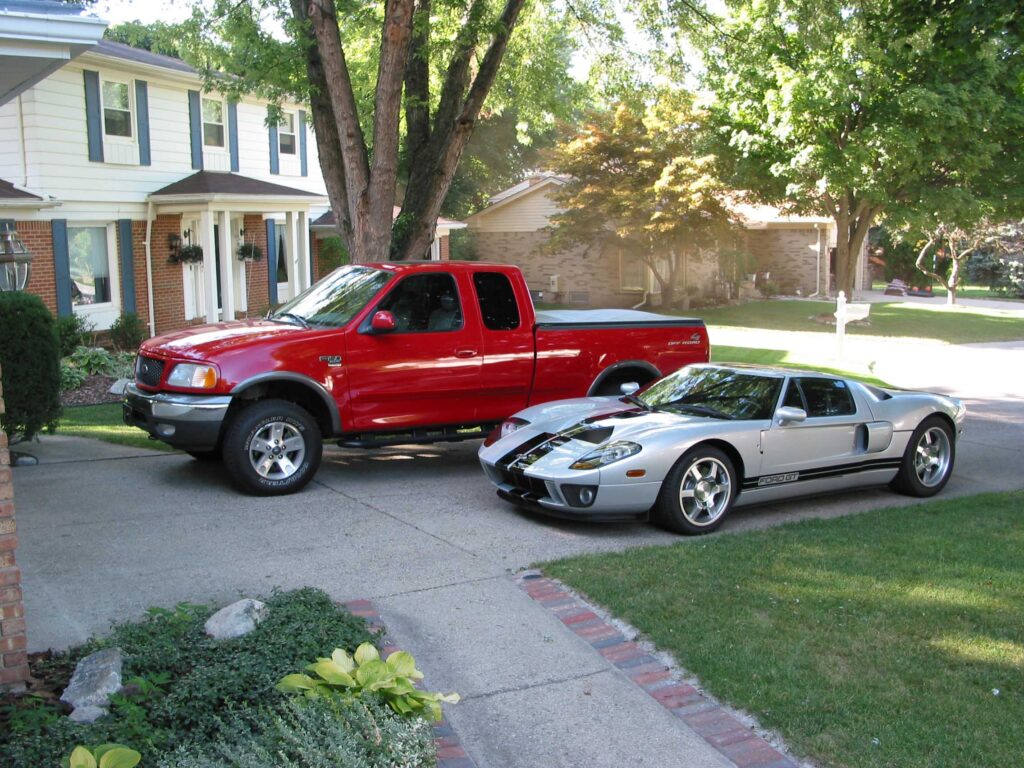
Why does the 2006 Ford GT offered at Gooding & Company’s “Geared” online auction look so much like the original Ford GT40 race car of the 1960s? And will an owner find it a versatile and robust supercar, one to be driven often? And does the GT have a backstory to justify its special place in the collector car market?
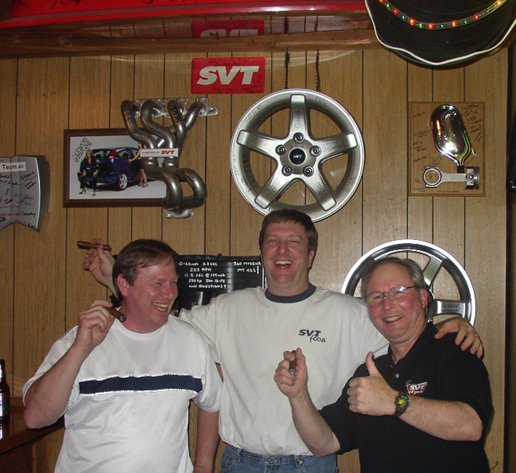
With just a few exceptions like the Taurus SHO and the 5-liter and SVO Mustangs, Ford in North America had been selling “stickers and stripes” pseudo-performance for two decades when Ford marketing boss Bob Rewey of the 1990s and 2000s and his frequent partner in Ford programs, CTO Neil Ressler, started Ford Special Vehicle Team in the 1990s. To maximize creative liberty, Rewey assigned a part-time Ford manager to ride herd on an outsourced group of marketing and PR guys. Housed in Roush Engineering facilities away from mainstream product development, Ford Special Vehicle Engineering (SVE) was comprised of seasoned engineering managers commissioned to develop performance variants for SVT to sell through a subset of Ford dealers. As an interesting side note, this little pirate ship included the solitary (and sometimes cantankerous) engineer who produced Ford police packages, under the glamorous banner DSO, for Dealer Special Order. That old boy was the father of the 1995 Mustang Cobra R. One might say the engineers of SVE were the happy few.
By the early Noughts, SVT and SVE were an established, cohesive organization with several excellent niche performance cars to their credit. They were ready for a much bigger assignment, one that only rarely arrives at a mainstream volume carmaker: a supercar.
“We scheduled a Product Evaluation day at Brands Hatch for a few years in a row,” says John Coletti, who was the manager of Ford Special Vehicle Engineering. No matter the marketing managers who shifted through, Coletti was the boss and everyone knew it. “During the third year, maybe 2001, word about the event spread throughout Ford of Europe and our supply base. Ford of Europe offered to bring the original GT40 press car from the 1964/65 Le Mans races.”
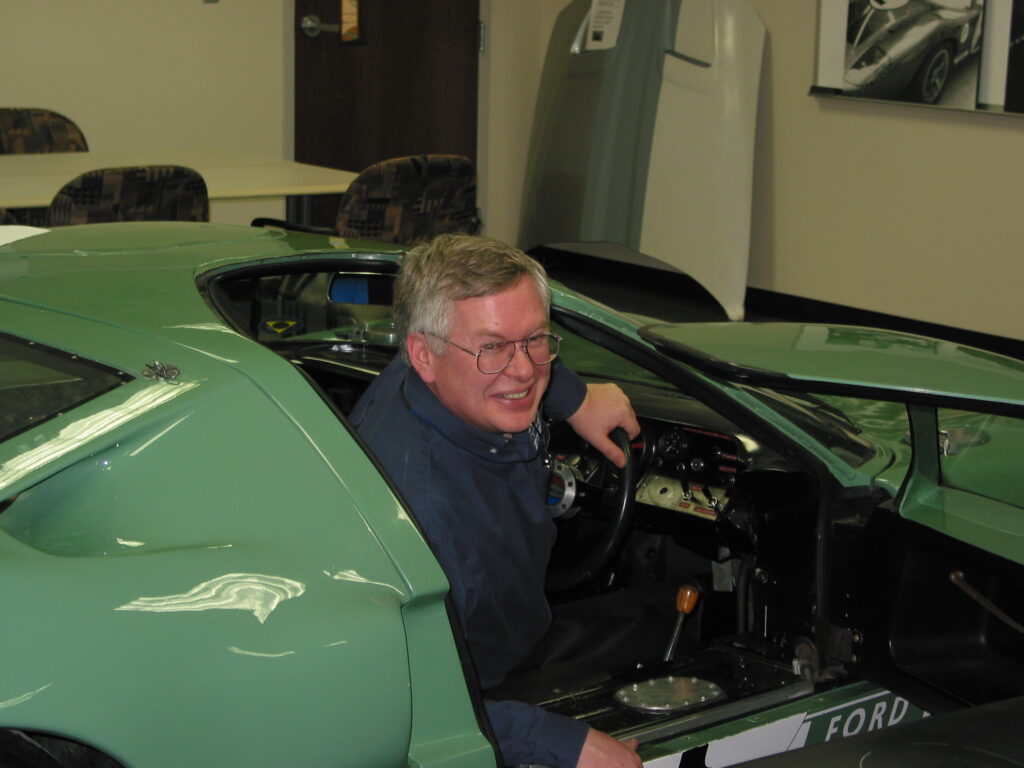
“When we were doing the Ford GT program, I had the green GT40 shipped to the States to inspire the vehicle designers to recreate the look of the original car. Interestingly, they shipped the car to the States without carburetor and distributor in the hopes of preventing us Yanks from driving the car around Dearborn,” says Coletti. “They must have been totally unaware that carburetors and distributors for smallblock Ford V8s were a dime a dozen in the States.”
“Having the car in our Petunia Studio proved invaluable. The original designs that [VP Global Design and Chief Creative Officer] J Mays had Camilo Pardo working on were essentially Audi TT knock-offs. They looked like an upside-down bathtub to me,” says Coletti. “I complained to Ressler and we went to [CEO Jacques] Nasser to share our concern. Jac asked for a review around the first clay. After listening to J Mays spew a lot of bull about how the clay was a modern interpretation of the original design, Jac told J, ‘I want that clay to look like that car,’ pointing to the green GT40 press car. And he reinforced his statement with a closing, ‘J, do you understand what I want?’”
And that’s why the 2004-06 Ford GT designed by Camilo Pardo looks like an 11/10ths scale Ford GT40.
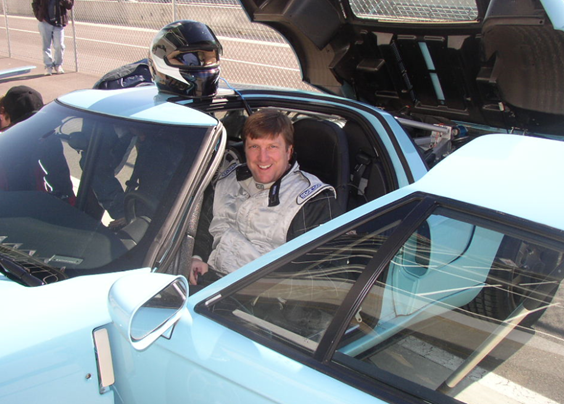
Is the GT a car to drive hard and enjoy? Robert “Bob” Brown served as quality engineer on the Ford GT. He was once my boss on a validation study in Japan performed for the late, great Martin Leach. Thanks to Brown, these Ford GTs are remarkably well put together and in fact there was only one quality error in the tightly compressed development timeframe, which was caught before more than a handful of cars were built. In the case of the Ford GT, quality truly was Job 1.
Ford GTs are not adornments, not trailer queens. The car offered here by Gooding, which was exported to Japan, has a few scars from its life on the road. Ford GTs are meant to be driven.
OLYMPUS DIGITAL CAMERA
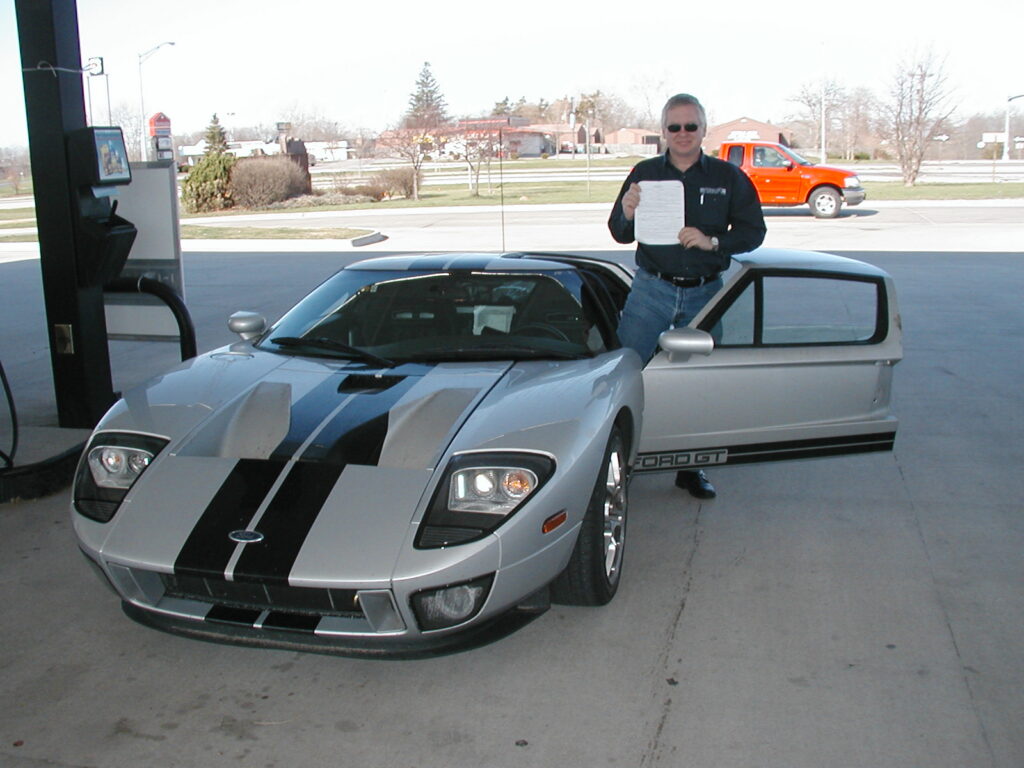
Bob Brown picked up a development GT in Los Angeles and drove it back to Michigan. “I was driving the car cross-country from Los Angeles. Early morning in Iowa, we were looking for breakfast. We were moving along, and an Iowa State trooper gave chase. Rolling roadblock slowed us down. The trooper says that the first speed he clocked was… … …rather high, and I was braking hard. I told him I wasn’t braking hard at all. Turns out the trooper was a great SVT fan, and owned one of our Lightning trucks. Turns out I had been in a 55-mph speed zone and I thought the limit was 70. In the end, he gave me a ticket for 64 mph in a 55 zone, and a $100 fine. He took us to his relative’s restaurant and we finally had breakfast. His patrol car was a Ford Crown Vic, featuring the police package we had developed.” On that same trip, Brown drove the car through the Eisenhower Tunnel on Highway 70, with snow all the way down to Denver. The GT is a real car, meant to be enjoyed.
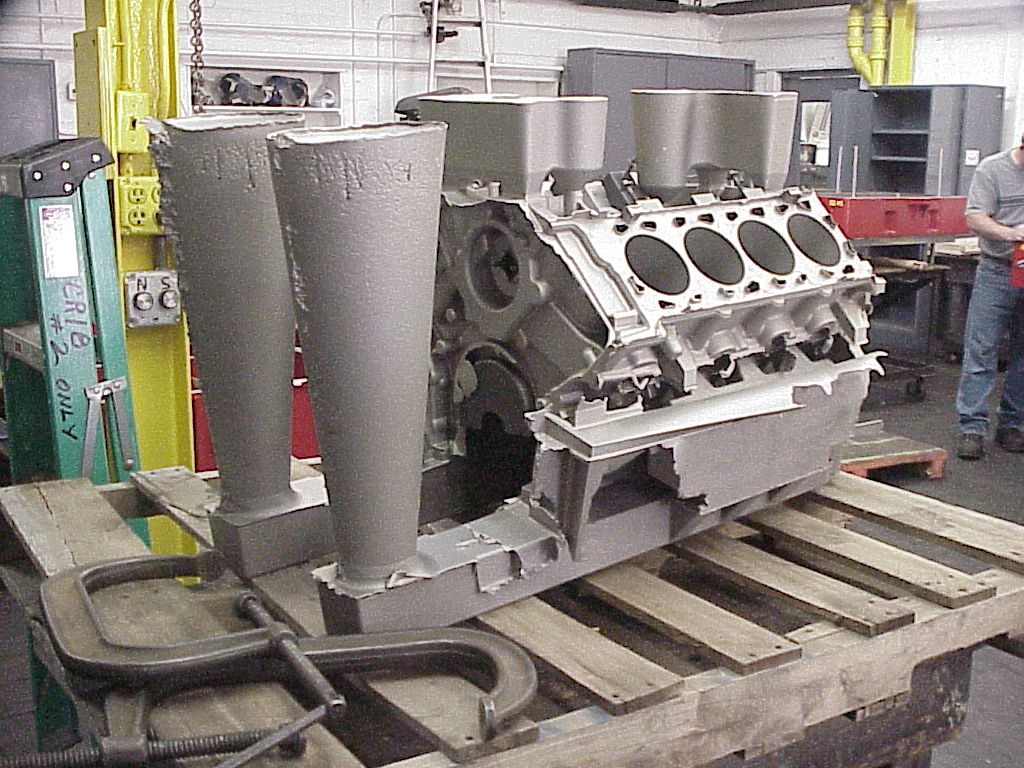
Any supercar is measured by its powertrain, by its engine. The GT engine may have shared basic geometry of bore, stroke, offset and interface surfaces with the mainstream 5.4-liter V8 with iron block, but there the similarities end. Curt Hill was in charge of powertrain at Ford SVE. “Roush was my engineering team, but we had tremendous support from Ford cylinder block and casting to take advantage of opportunities we could only do on a low-volume block. I recall the casting tech spec proudly proclaim he designed the casting to support 1000 hp. Field experience suggests he over-achieved his own target,” says Hill. Tuner shops have built Ford GTs to produce phenomenal amounts of power and set very high top speeds, so the block and basic architecture have been proven “in the wild.”
“The cylinder head was derived from the [2000] Cobra R, redesigned for improved cooling, strength, structure, and tolerance control. The casting is distinguished with ‘Ford GT’ embossed on the side. To feed the engine we added a second fuel injector for each cylinder. At that time, a single injector that could support the fuel demand at max load, did not have the control at idle to meet emissions. To control the companion injectors, we added a separate module with the necessary drivers and interfaced it back to the EEC IV engine processor,” says Hill. Take that to mean this is a unique remix of Ford pieces, and the head is a unique piece due to the secondary injectors.
“The closest part to carryover from the base 5.4-liter is the crankshaft, which was already a twisted forged crank,” says Hill. These forged cranks were all produced by Ford partner Gerlach-Werke. “We did serious design work on the front of the crank to manage stresses. Pistons, rods, and bearings were all new.”
“A major change to lubrication is the dry sump system. That let us lower the engine in car, reduce crankshaft windage, and improve dynamic management of the oil. Cooling performance was significantly upgraded with the aforementioned casting mods and addition of a new high-flow water pump. The supercharger is a Lysholm screw-type compressor, which is much more efficient than the traditional Roots style, common at the time,” says Hill. Twenty years ago, the no-lag turbocharging technology we have in today’s supercars simply did not exist and superchargers had their day in the sun. Superchargers were the best guarantee of meeting horsepower goals. SVE/SVT used them on the second-generation Lightning truck, which should be considered a collectible piece, and also on the “Terminator” version of the Mustang Cobra road cars. If you wonder why the latest Ford GT has turbochargers, it is simply because that engineering breakthroughs of the past decade make it possible. But just as superchargers distinguish the Jaguar Land Rover R car V8s, they bring similar character to the Ford GT engine.
For those who really need to know, to build the library around their Ford GT, Hill recommends an SAE paper that touches on many of the engine design features and processes. It is entitled “2005 Ford GT Powertrain-Supercharged Supercar.” SAE Technical Paper Series 2004-01-1252.
Many people don’t know this, but during the early stages of development, a V10 proposal was explored and subsequently dismissed. Why, you might ask? “The V10 proposal had its appeal, being naturally aspirated, but it had challenges that could have jeopardized the program,” says Hill. “Probably the biggest of which was lack of an engine controller for it. The prototype engine was controlled by two processors, one for each bank. That was not a viable production path. The time and resources to develop a new controller, strategy, and software was not feasible.
Aside from that, it would have been a challenge to comfortably hit the 500-horsepower program target. It made 500 horsepower on dyno, but that was with very aggressive cams, inlet and exhaust losses. By the time it was tuned to meet emissions, I would have been spending a lot of time in meetings explaining my performance shortfall, not to mention the struggles I would have had achieving durability.”
“The supercharged V8, on the other hand, easily made target performance and passed the critical durability test relatively early in the program. It also provides superior driveability due to the supercharged characteristic torque curve,” says Hill. One must only explore YouTube for Ford GTs built by tuner shops to set extremely high top speeds to understand the engine’s robust nature, and fully understand the series of excellent engineering decisions made in a tightly compressed development time frame.
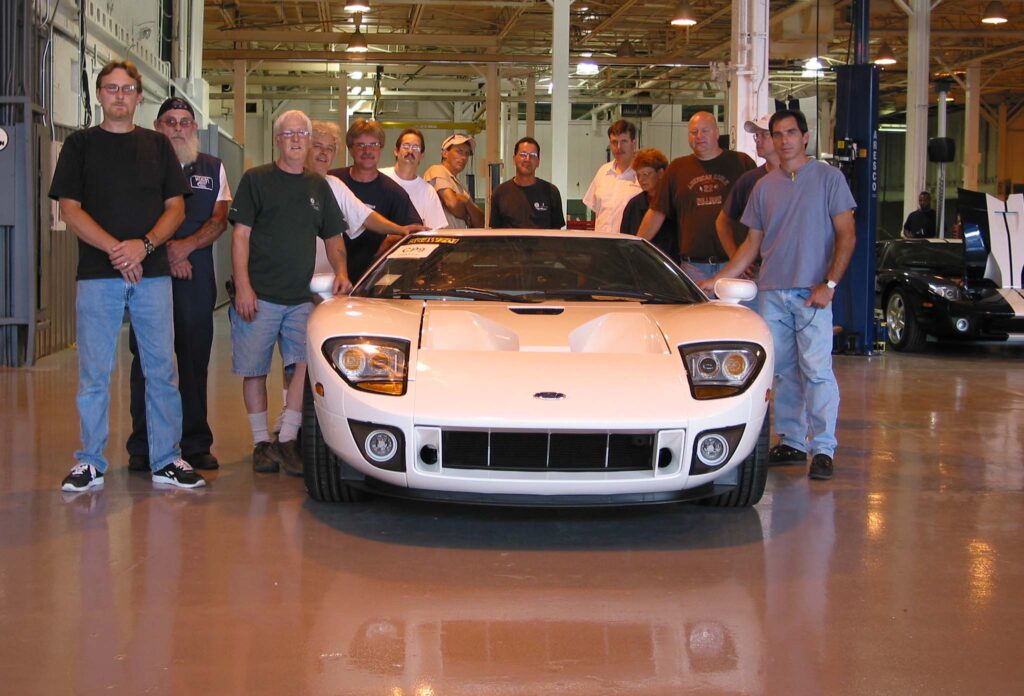
John Coletti deserves full credit. After working on a number of successful niche vehicles for SVT, with fairly tight development timeframes, he and his small band of engineering managers knew that to succeed there could be no wild inventions and that in speccing pieces, it was best to err on the side of over-design because there’s little time to recover from mistakes. The resulting car is as robust as any supercar ever made. Thankfully, the overly complicated and somewhat goofy looking GT90 show car was spiked and the choice was simple: either build a 427 Cobra roadster using modern materials and methods, or build a GT40 successor. Ford upper management, meaning Rewey and Ressler, along with Coletti made the right choice. Corvette and Viper already existed, front-engine supercars. Better to build a GT.
Without Coletti and Neil Ressler, the car would not have been produced. As I myself experienced in my tenure with SVT, there were forces inside Ford Motor Company that did not want this program or any of the other incredible SVE/SVT programs to succeed. More than anything, the Ford GT demonstrates the need for wise executive leadership capable of aggressively imposing air cover. Th old line about how “the machine gets what the machine wants” certainly applies in most mainstream automotive companies. Special cars only succeed if the senior executives protect the program.
Though Ford SVE was partially dismantled at one point in the Noughts, under CEO Alan Mullally the group was reestablished, and morphed into Ford Performance. I for one hope Ford maintains the group for years to come. A small group of smart, clever pirates can accomplish great things.
Ferrari has an advantage over all but a few of its rivals in development of supercars and sports cars: seven unbroken decades of institutional knowledge derived from success in the highest realms of motorsports.
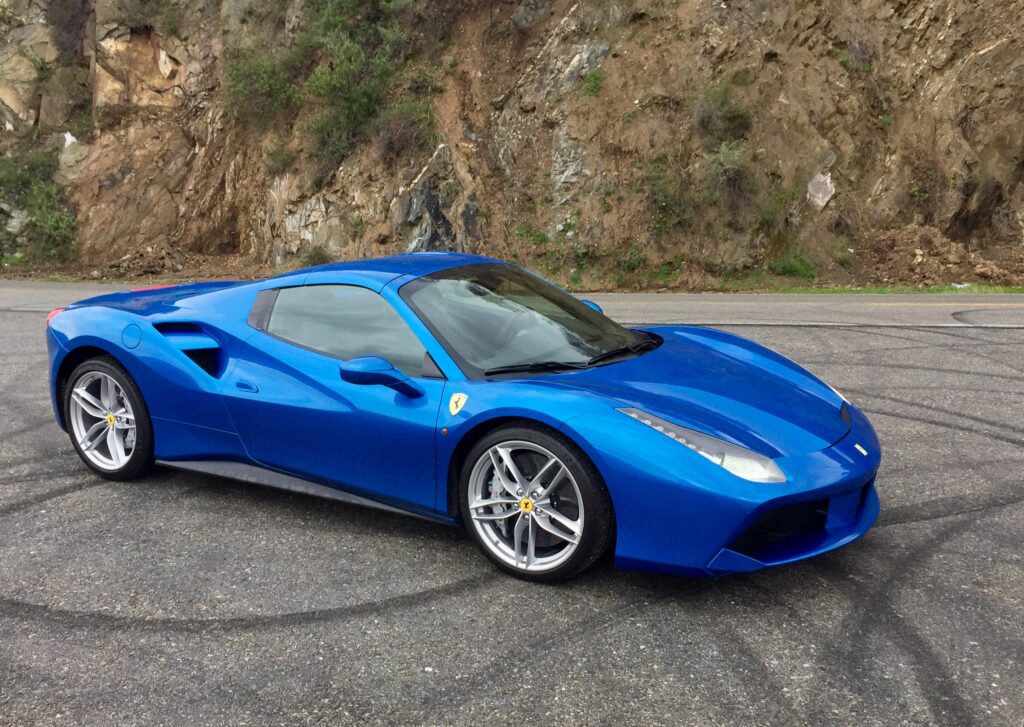
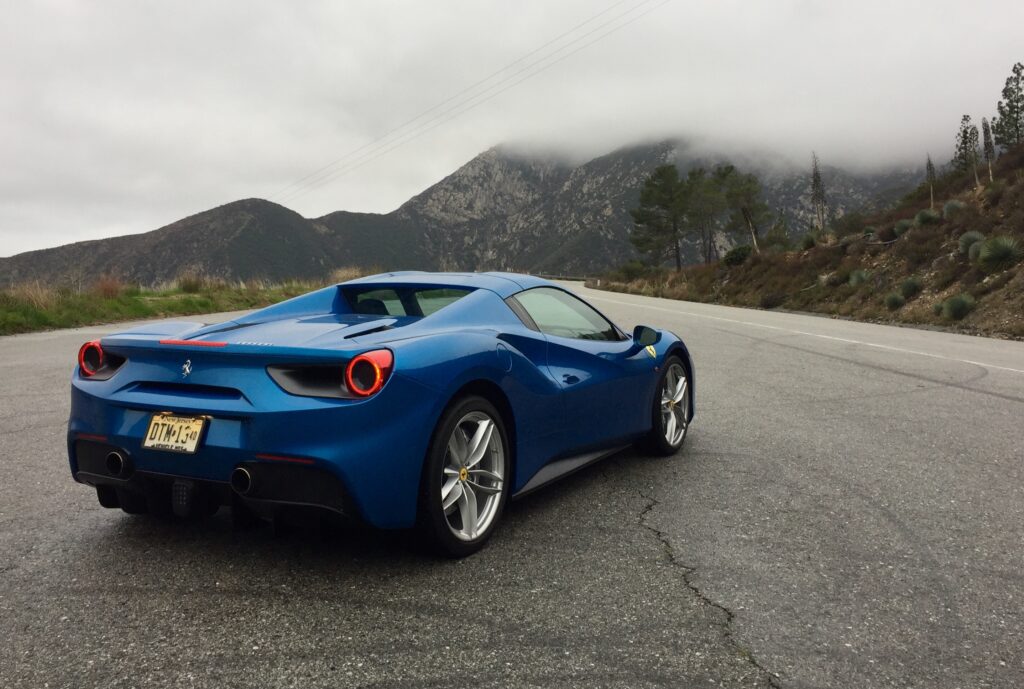
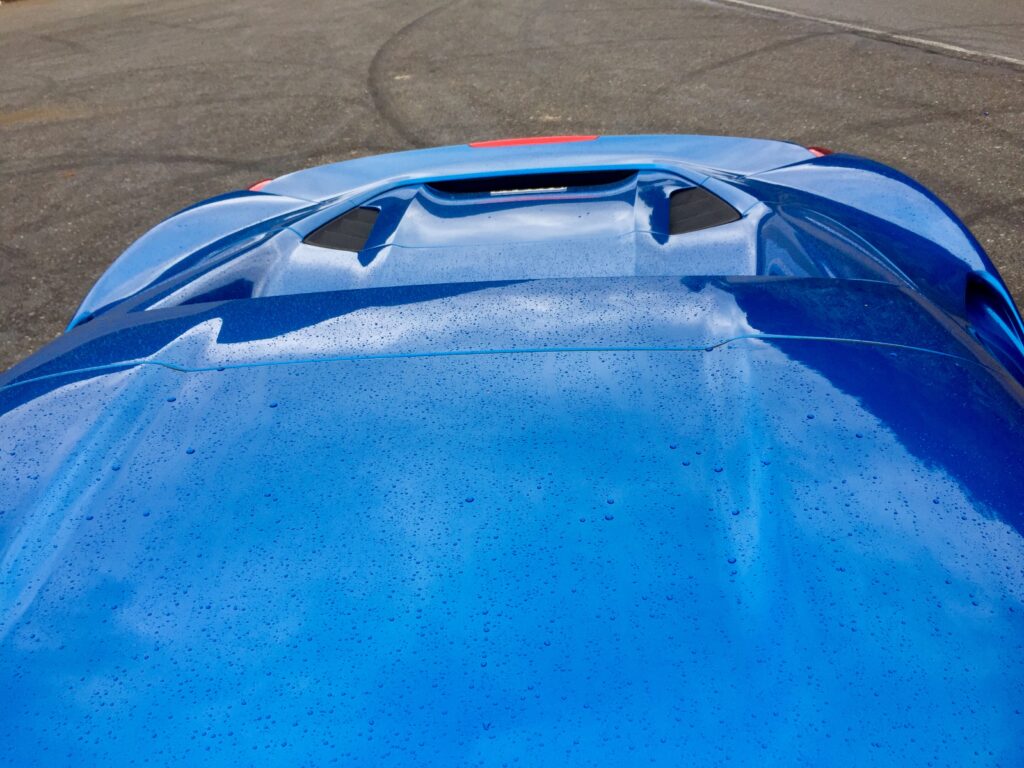
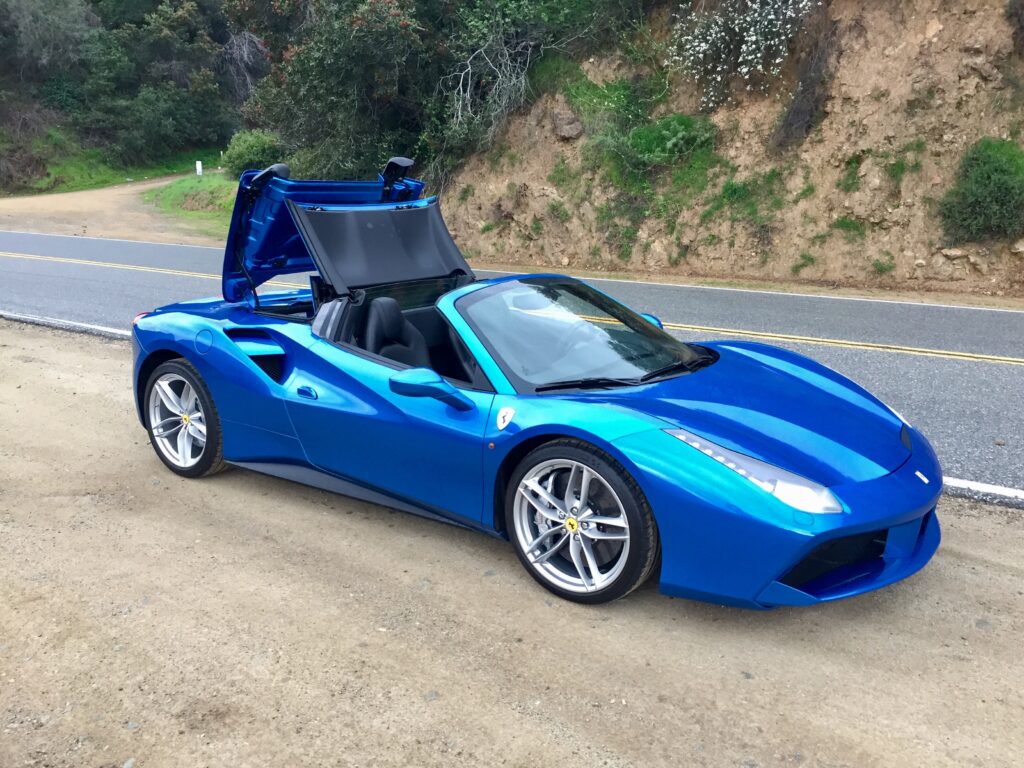
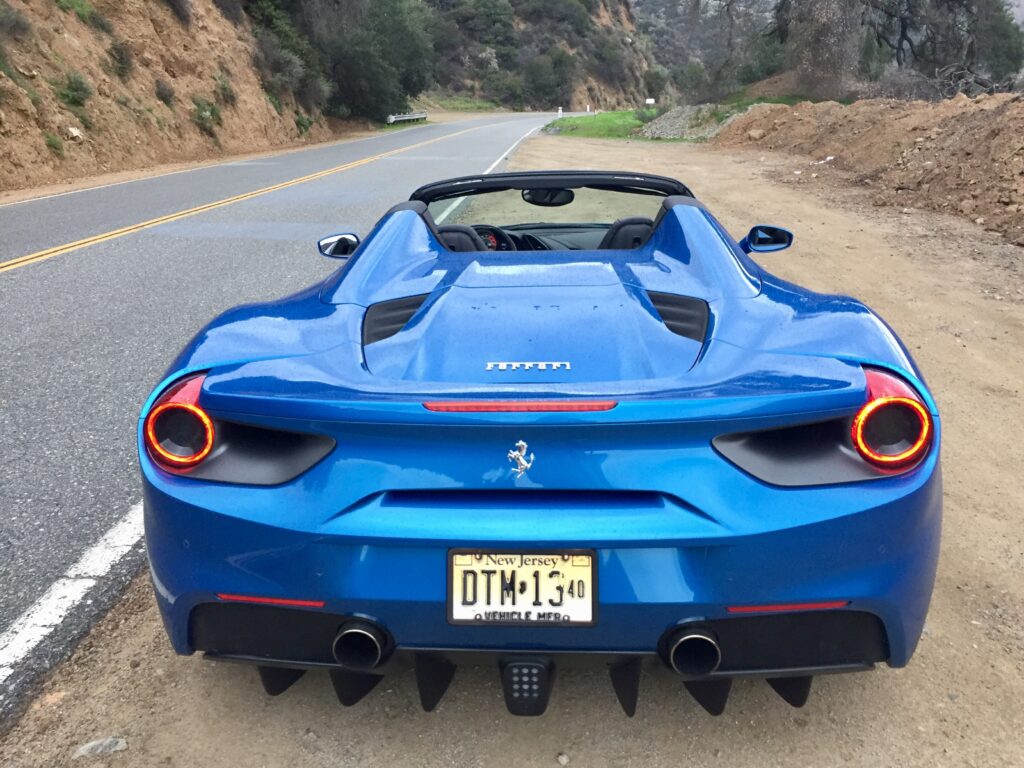
Even in a world as rarefied as open-bodied mid-engine supercars, Maranello’s 488 Spider stands apart. It’s not just the 10-second quarter mile or the 60-mph sprint under three seconds or top speed a few ticks beyond 200. Other supercars deliver equally good measurables with ruthless, exhilarating efficiency.
In 488 Spider, Ferrari melds quantifiable speed with musicality, human factors that make the cockpit, steering and suspension extensions of the driver’s body, computer scripting that’s an extension of the driver’s brain and nervous system, and an almost erotic driving sensibility that engineers from less passionate northern European cultures rarely aspire to. A select few cars are faster, quicker, more expensive, more accomplished on a racetrack for those who indulge such passions, but 488 Spider delivers sensory immersion that leads to a transcendental state of mind—it’s high-speed Zen yoga.
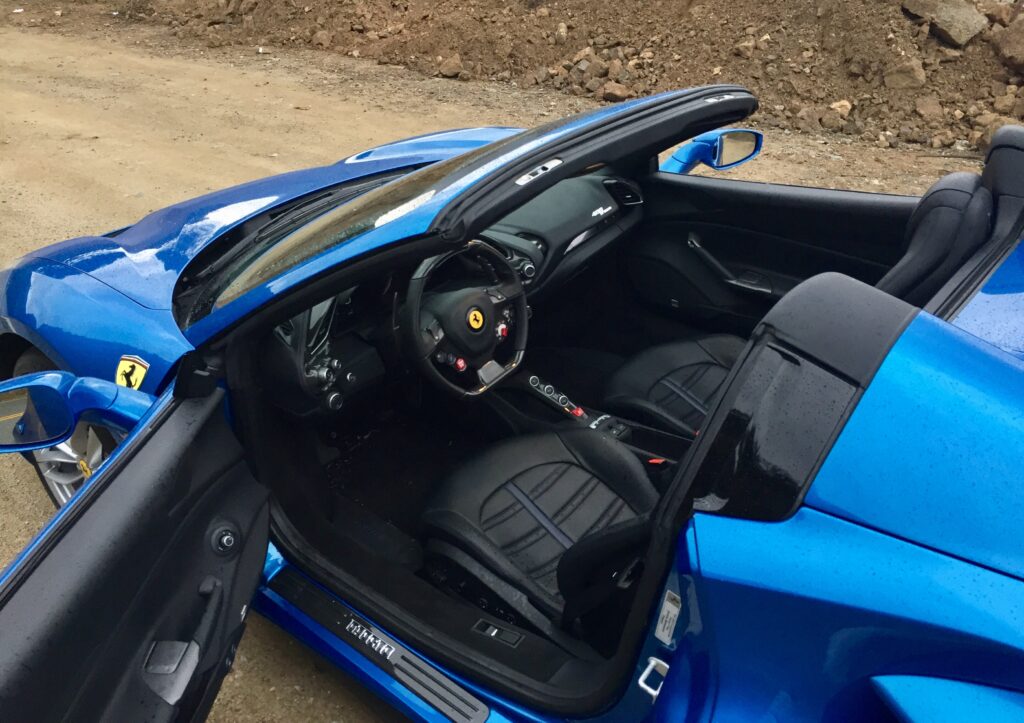
488’s architecture is framed with Ferrari’s most lucrative market in mind. Tall American males no longer must adopt the Magnum P.I. driving method, top down for adequate headroom. Top up, I had several inches of headroom and I am six foot two+. There’s no hint of claustrophobia as one finds in quirky English trackday cars. A quaterback and perhaps even a linebacker will find enough knee, foot, elbow and shoulder room in a flawless driving position, that low dash and big windscreen opening the cockpit to the road and world ahead.
488 is no luxury vessel, but craftsmanship is to a high order with materials and carefully considered shapes and details that express the Italian understanding of a beautiful life. A companion will revel in every mile of a romantic weekend trip, especially if she participates as copilot. There’s even a passenger-side display screen that can cycle through a wealth of performance data. The front trunk is deep and flat-sided, demanding little sacrifice from a couple familiar with sports car travel. Custom luggage from Ferrari’s atelier will maximize touring capability and thus romantic harmony.
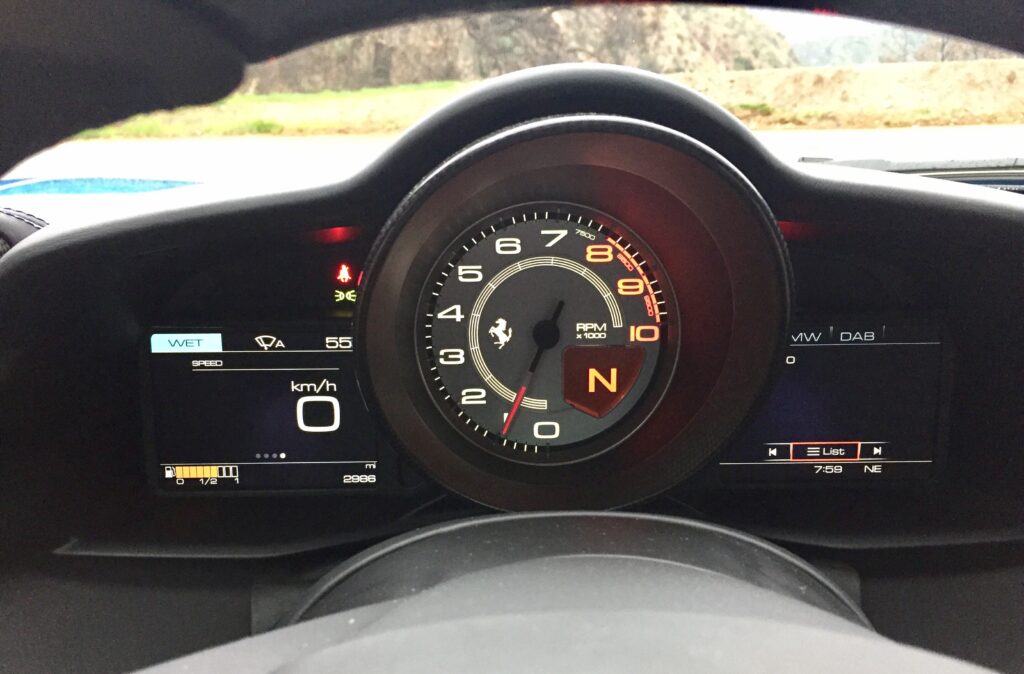
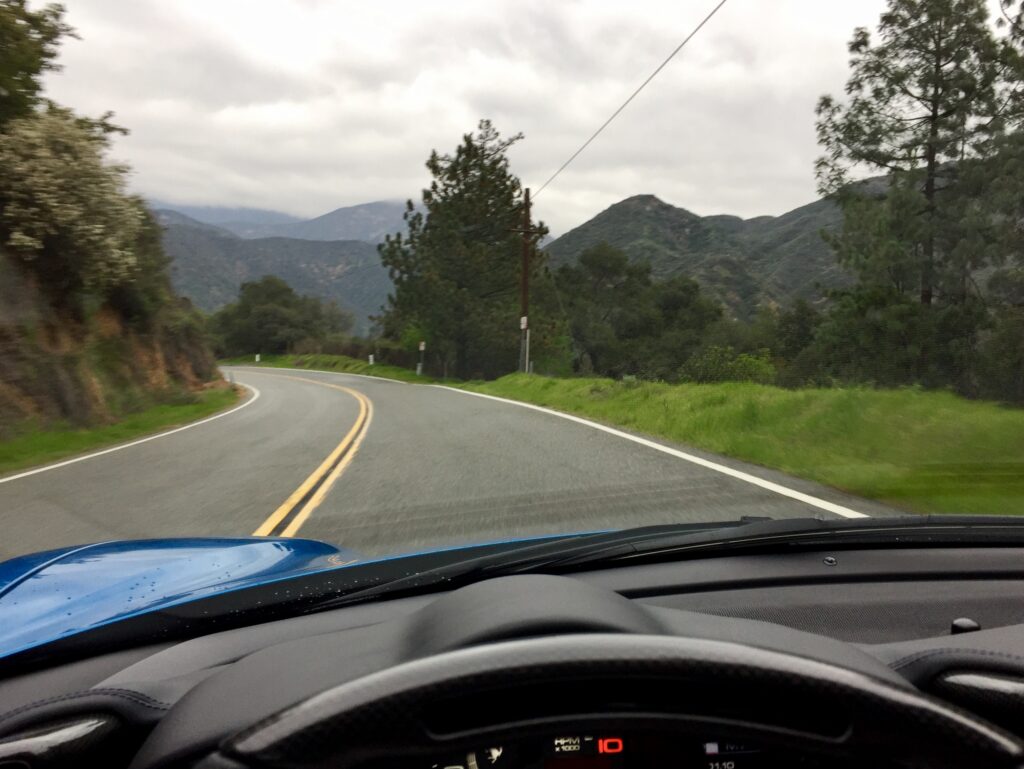
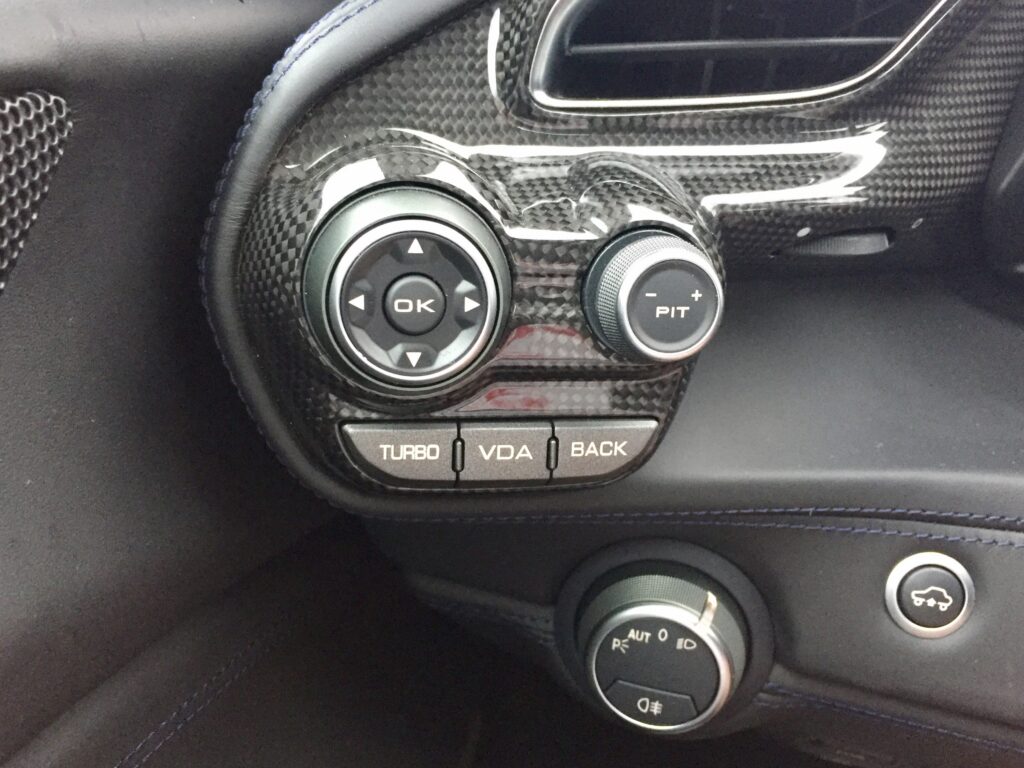
Primary controls sited on or around the steering wheel within fingertip reach define 488’s mission: when you drive, DRIVE. Though an enormous tachometer is dead ahead to keep you mindful of the redline, the engine is sewing machine smooth, never feeling or sounding strained on the way to 8500 rpm. The red LEDs built into the top of the steering wheel rim are the best warning of redline’s rapid approach, illuminating left to right.
Sound and visuals are pure Scuderia drama when ripping up a freeway onramp to speeds over 100 mph in about seven seconds—every onramp is your playground of the moment. Sightlines over the low dash, steeply raked hood, and swelling fenders provide subliminal connection to the steering and suspension, and the road rushing under your feet heightens excitement. Outrageously low and exotic exterior design have only heightened function, not compromised it. THis car is exotic to enhance the driving experience, not to aid curb appeal.
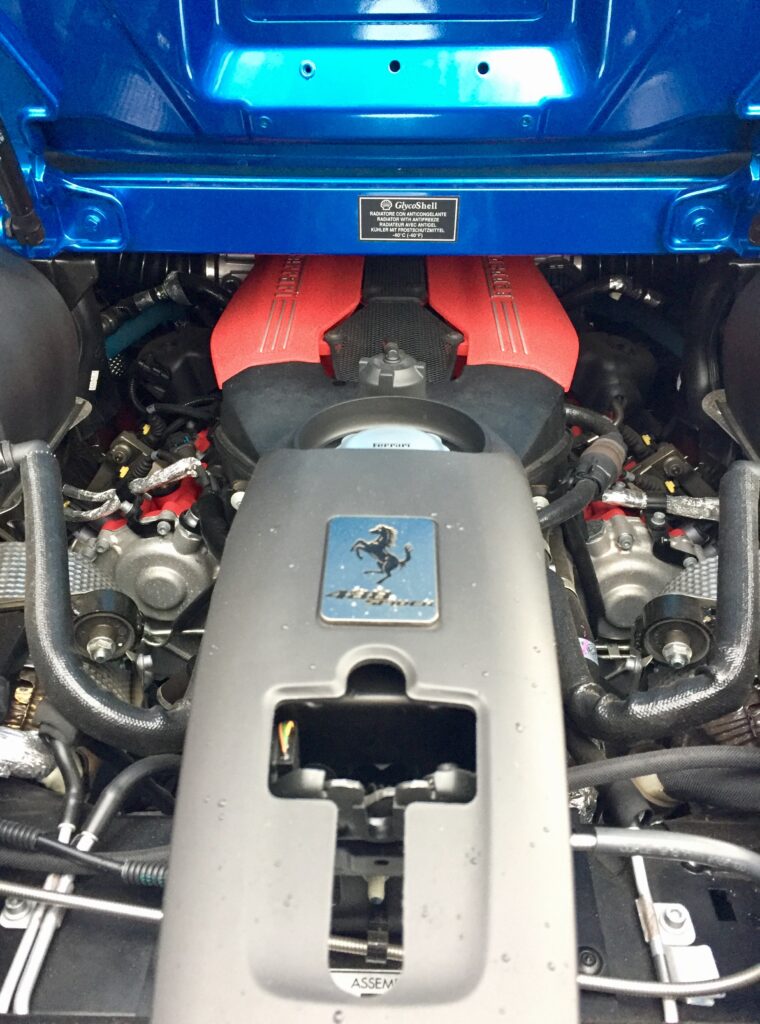
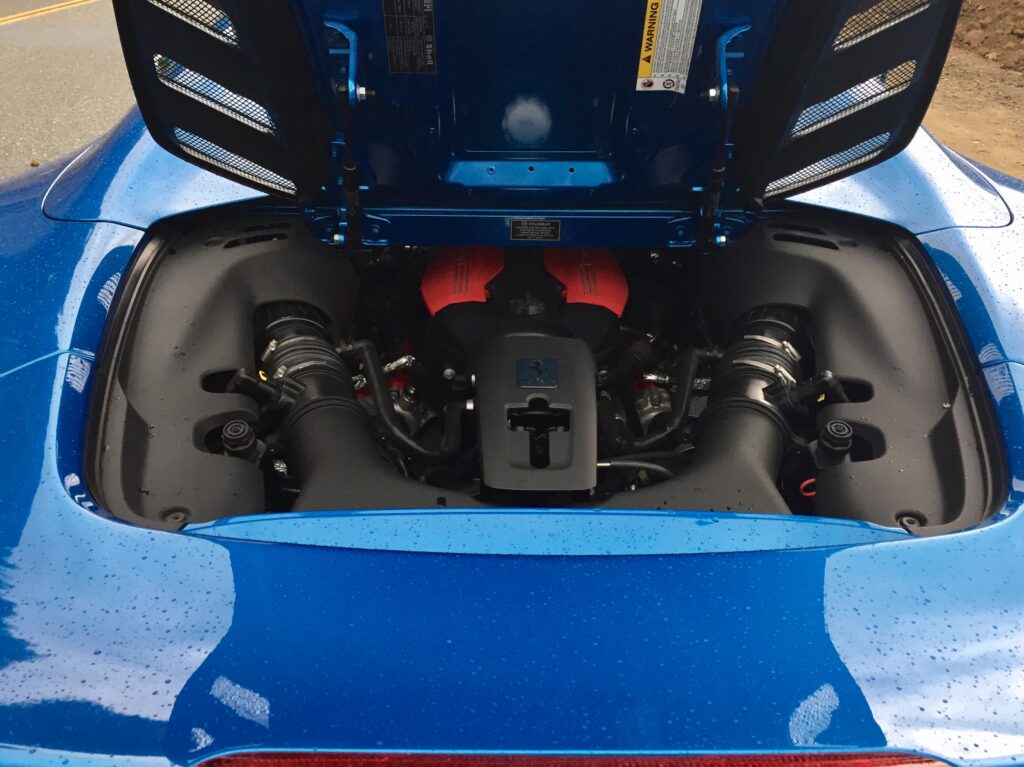
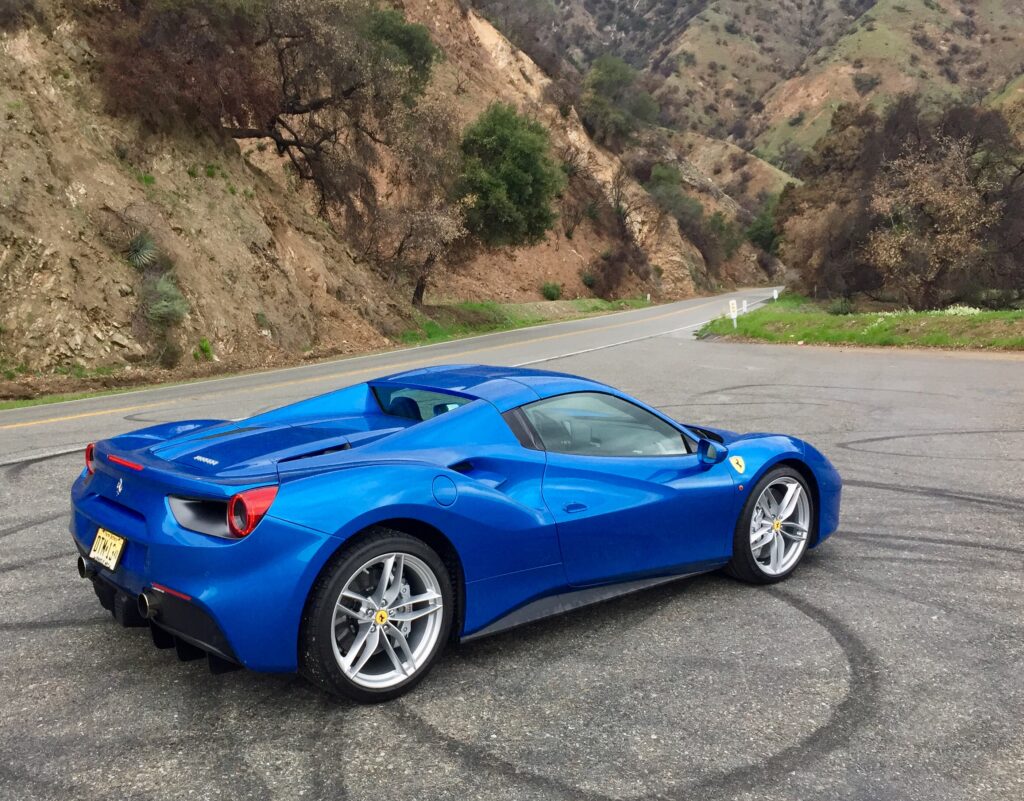
Before 488’s arrival, talk of a turbocharged successor to the naturally aspirated 458 Italia provoked anxiety. Thanks to nearly instant-on twin turbos the 3.9-liter V8 gushes with easily exploitable torque yet shrieks, yips, and yelps in classic Ferrari style. After 30 minutes in this Blu Corsa 488 Spider, a friend who owned a 458 Italia for several years said he’s inspired to own one more mid-engine Ferrari. 488 has about 90 horsepower more than Italia, a significant jump. Of far greater importance, 488 has about 150 lb.-ft. more torque arriving 3000 revs lower than in Italia’s 4.5-liter V8. This engine is far more flexible, torque and horsepower far easier to exploit, to apply.
Engine tone changes substantially at 3400 rpm, and from that point to redline, 488 can get the jump on almost any other car. What little of Italia’s Maranello Philharmonic Orchestra was lost to the turbos has bought shocking roll-on acceleration. The only things quicker are hypercars, or trackday specials that are brutal sweatboxes that grow tiresome after 20 minutes.
Ferrari’s computer geeks are exemplary, due special commendation. Manettino selects the scripting, allowing several performance personalities ranging from daily commute to track day sans stability control. Twist Manettino full left to “Wet” and 488 engages in a refined conversation—only clear, useful information reaching the steering wheel and seat-of-pants. No junk, jangle, vibration or confusion. Maranello’s engineers fully exploit the potential of adaptive dampers. Plush and supple in Wet, 488 can execute short commutes in the savagery of Los Angeles street and freeway traffic. [In later years, Ferrari developed a unique setting in Manettino for very supple suspension settings, a big help when covering miles on a long day.]
Move to “Sport,” put your boot in it while paddleshifting through the gears, and 488 ever so slightly spins the tires and sidesteps into second gear with the subtlety of a waltzing master, all without the least hint of shock or banging from the gearbox. This lightweight 661 horsepower engine is a musical instrument, a French horn with string accompaniment.
488 delivers quantifiable performance but also the dance, symphony, stirring of the loins, the mind-meld connection. Italians understand that it’s not about merely going fast—that is for racecars designed to a singular purpose. It’s about how you go fast and how you feel upon arrival.
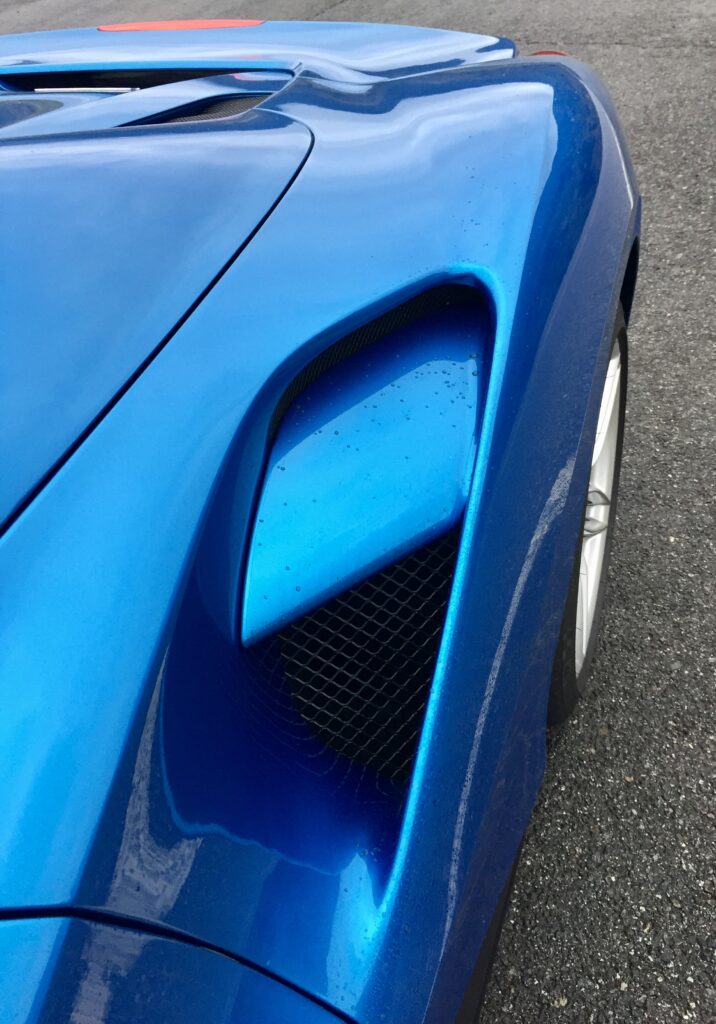
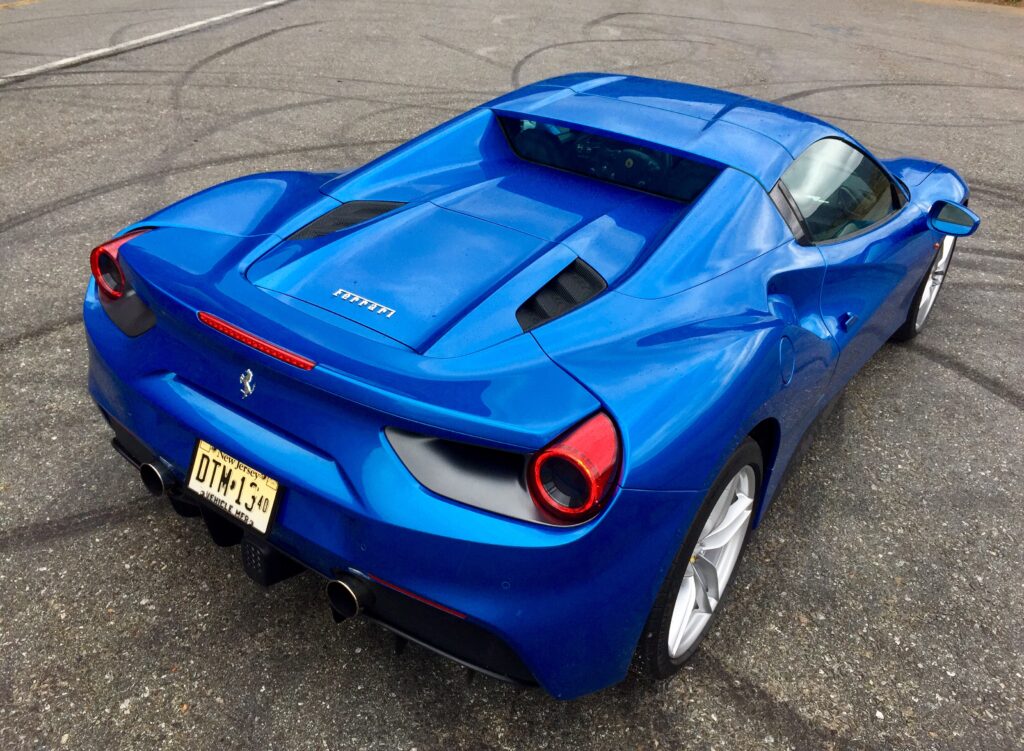
Complex shapes and surface development of 488’s body are all resolved, and border on pure erotica. Curves, creases, details, surface tension, it all works. Design up front may be guided by aerodynamics, yet origins trace at least to the Magnum P.I. 308, and even to the wellspring of mid-engine Ferrari sporting cars, the more voluptuous SP Dino sports-racers of the early 1960s. Shapes that begin in the door mid-section, twisting and rising into the side intake pods, roof pillars and rear fenders, are unparalleled in the automotive world. Abstract industrial sculpture…Humphrey-Lahti and Henry Moore meet the wind tunnel.
I first drove a 488 GTB at Pebble Beach almost two years ago, and 90 minutes behind the wheel left me in a heightened mental state, in an orbit separate from the people milling about me at Casa Ferrari. It’s just that good. [Damn shame the videographer assigned to work with me didn’t understand how to shoot a car in motion, but we live and learn.] During our week with 488 Spider, my lovely attorney and I attended the LA Opera’s performance of Mozart’s comedic “A Night in the Seraglio.” Ferraris and Mozart’s finest compositions share much that sets them apart: unmistakable within five measures, fostering a sense of childlike wonder shot through with zest and verve that sets the heart dancing, emotions soaring with a near-narcotic rush before settling to sustained, blissful well-being. Ferrari 488 Spider is a singular automotive experience.
Auto racing photography was effectively invented and defined by Louis Klemantaski, who was born in the Manchurian city of Harbin, far from the center of the racing world. Louis’s father, Jacques, had hoped to build his fortune in Manchuria by exporting soybeans and importing Willys-Knight and Overland cars. In support of his father’s efforts, Louis was driving by the age of eight, and in 1922 received a “Brownie” box camera for his tenth birthday. The die was cast.
Of Polish ethnicity but a citizen of Great Britain, Jacques sent his son back to England for his formal education, at Kings College. But once he discovered auto racing, Louis spent less and less time at school and more time photographing cars. A severe ankle injury on a motorcycle in 1933 and a lack of funds ended his racing ambitions. By the age of 21, he had turned to his early passion, photography.
Klemantaski mastered and built upon the photographic techniques of Jacques-Henri Lartigue, whose experiments in the early 20th Century are the foundation of action photography.
From 1936 to 1974, Klemantaski was a fixture at Grand Prix events, Le Mans and the Mille Miglia, so much so that editors who had trouble spelling his name published his photos with the byline “Himself.” Klemantaski’s fine manners and signature appearance—luxuriant coiffure, gleaming goatee, and natty clothes—made him a much beloved character and engaging dinner guest.
Though racing today remains a dangerous sport, with death or serious injury a possibility in spite of decades of safety engineering and medical advances, students of history know it is not the blood sport that existed from the Teens into the Seventies, when skilled drivers died far too frequently. In those days of lax safety precautions, Klemantaski could be found at the verge of a racetrack, snapping photos mere feet away from cars moving at high speed.
Without a GoPro to place inside a racecar, Klemantaski was body and soul part of the top echelons of motorsports, and he was fearless. On five occasions he strapped himself into the passenger seat of a thundering Fifties sports-racing car to serve as navigator in the Mille Miglia, the famed 1000-mile open-road sprint from Brescia to Rome and back. As navigator to Ferrari piloto Peter Collins, Klemantaski snapped Enzo Ferrari’s favorite motorsports photograph, seen at the top of this post. Working from the cockpit, in harm’s way with little more than a cardboard polo helmet for protection, Klemantaski captured some of the most iconic of all motor racing images.
In 1989 Louis Klemantaski sold his body of work to Peter Sachs, who established the Klemantaski Collection, a private archive that over the past 25 years has purchased, documented, digitized and preserved the works of more than a dozen of the best European and American race photographers of the 20th Century.
Museum-quality books have been a specialty of the Collection since the 1990 publication of Klemantaski & Ferrari, and a new book arrives just barely in time for Christmas 2014. Over more than two decades, the Collection has refined the business metrics of niche publishing, delivering exquisite books to a small body of discerning collectors who appreciate timeless graphic design, impeccable historic research, and high standards of printing and binding. They’re not produced in pursuit of great profit, but Klemantaski books will not land in the bargain bin at Costco or Wal-Mart. To have them on your bookshelf is an indication that you know, you understand. As with Ferraris, only a few are ever made.
Aptly titled Klemantaski — Master Motorsports Photographer, this new edition is dedicated primarily to photos not previously published. For text, captions, and another layer of fact-checking research, the Collection engaged British motor racing historian Paul Parker.
The book includes more than 300 black & white and color images beautifully spread over a generous 272 pages. We have posted a few Klemantaski photos from this new edition, plus one that’s a personal favorite, at the top of this post.
NOTE: A version of this story appeared in Forbes in February 9, 2015.
Jean-Marc Gales, the newly recruited CEO of Group Lotus Plc., arrived in Norfolk, England last May with a simple but daunting mission: to restore the once mighty British automaker as a supercar superpower.
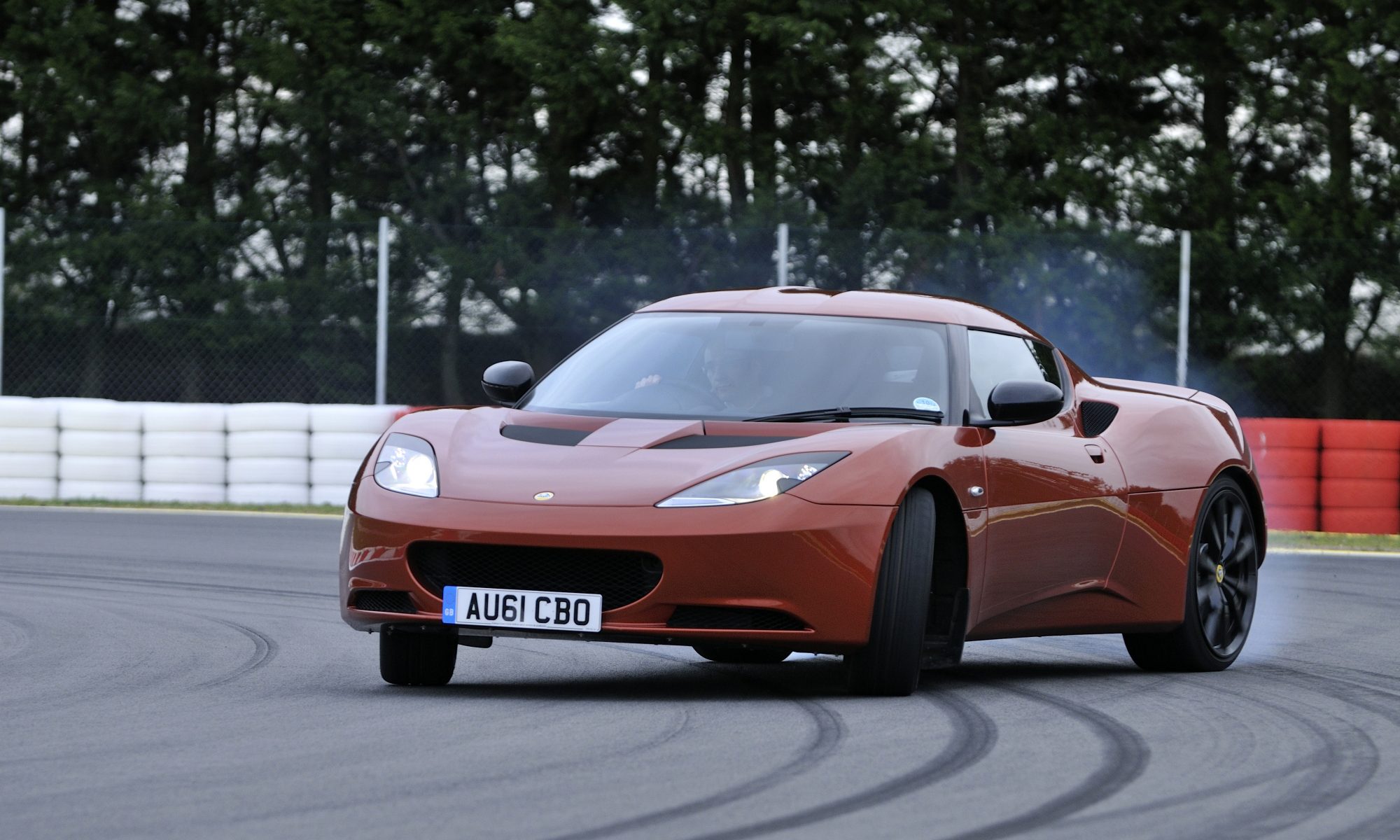
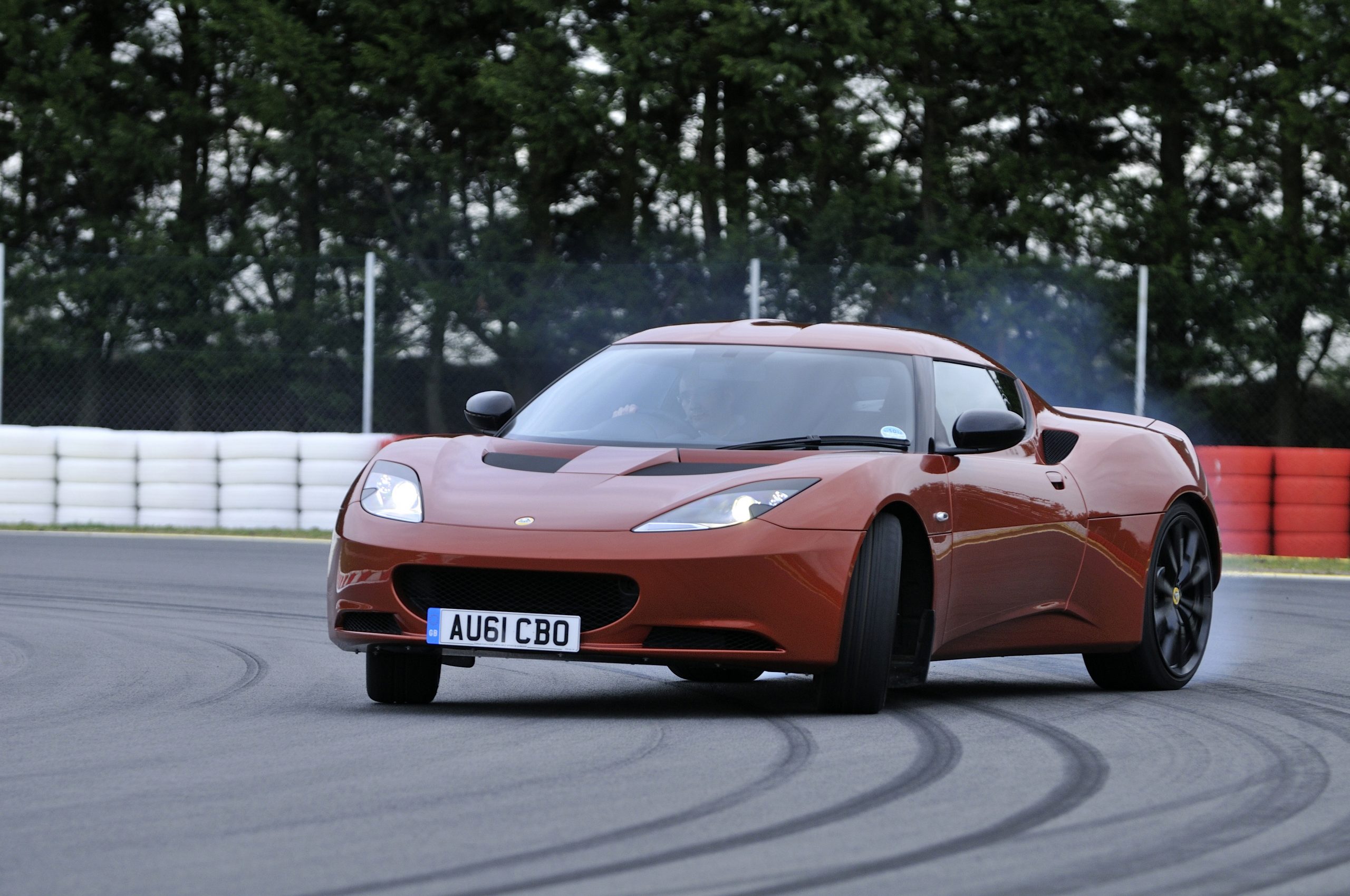
Lotus Evora at Hethel, England, development track.
For the past few decades Lotus has been seriously stalled while its main rivals–Ferrari, Porsche, McLaren–have shot past them in auto racing, production vehicles, engineering services and profit. The past two years alone Lotus has seen nearly $400 million in losses. Since 1998, Lotus has had only four profitable years.
The 52-year-old Gales began his career leading Volkswagen fleet sales, followed by a stint managing Mercedes global marketing before he claimed the presidency of Peugeot in 2009. An acute technocrat steeped in the hard business of selling large numbers of vehicles, at midcareer Gales has a surprising sense for the entrepreneurial. And apparently a fearless heart.
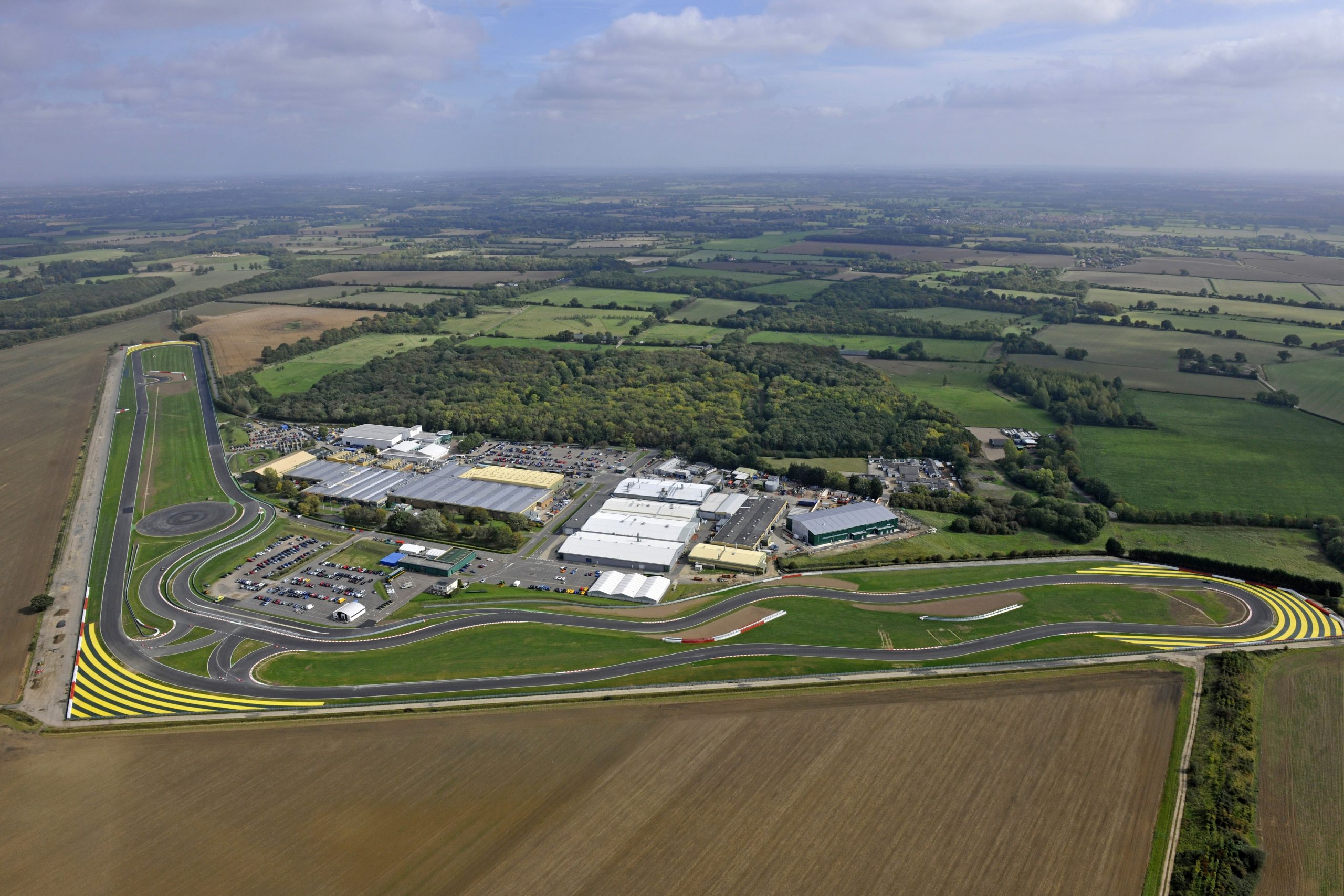
Lotus is based in Hethel, England, built on a decommissioned World War II bomber base.
Walking the Lotus facility last May, Gales performed combat triage, asking his engineers for products to execute and market within a year. His goal: to unveil the next generation of Lotus vehicles at the Geneva auto show in March of 2015.
With the engineers revving, Gales shook the financials. “It required painful decisions,” he admits. “It does not take 1,250 employees to produce 1,296 cars–an unsustainable condition.” He let go of 25% of the workforce.
Gales then put on his salesman’s hat. “The dealer network was extremely spotty. We had no dealer in Paris, no dealer in London, no dealer in Cannes or Milan, Abu Dhabi–no dealers where there are people with the money to buy our cars.”
He signed up 25 new dealers and by year’s end will have another 50. Voting with their own money, dealers have agreed to buy vehicles and spare parts for cash, and self-fund build-out of their dealerships, boosting Lotus’ cash flow. “The dealers are so confident that they are carrying the investment themselves,” Gales explains. “Dealer network expansion is essential for driving volume above 3000 cars a year. The average Lotus dealer, and it is prudent to stick with an average here, sells 20 new Lotus cars and around $80,000 in spare parts a year.”
Why are dealers willing to put up cash for a brand few people beyond sports car enthusiasts recognize or understand? A brand that has swayed from one financial disaster to another most of its existence? The power of mythology, the promise of new products, a changing regulatory landscape that demands more efficient vehicles, and a no-nonsense CEO.
Mythology begins with Anthony Colin Bruce Chapman (his four initials are incorporated into the Lotus badge), who founded the company in 1952 in a London horse barn. By 1963 Lotus had soundly beaten Ferrari, Porsche, Cooper and BRM to secure its first of six Formula One World Drivers and seven Constructors championships. Lotus also introduced rear-engine design to the Indy 500, eventually winning in 1965, forever changing American motor sports. Always the entrepreneur, in 1968 Chapman brought cigarette sponsorship to Grand Prix racing, which helped make him a millionaire and changed the face of all motor sports forever. The team’s last major success came in 1978, with Mario Andretti at the wheel of a Lotus Grand Prix racer that perfected the concept of “ground effects,” the car an inverted wing that literally sucked itself onto the track, allowing it to corner at shockingly high speeds. Andretti and Lotus claimed World Championships that year.
Since the 1960s, Lotus has been headquartered at a former RAF bomber base in Norfolk, not far from the English Channel. The handling course that has given rise to so many balanced chassis with brainwave steering includes portions of the old bomber runways. Since the 1960s, Lotus has been headquartered at a former RAF bomber base in Norfolk, not far from the English Channel. The handling course that has given rise to so many balanced chassis includes portions of the old bomber runways.
Away from the track, Lotus developed giant slayers, innovative but quirky sports cars built on the principles of Colin Chapman: Simplify, then make it lighter. Always diminutive, and with rare exception powered by engines first from Ford, then GM and now Toyota, Lotus cars were all about brain wave steering and handling.
Despite some renown in the late 1970s–James Bond’s amphibious Esprit in The Spy Who Loved Me–by 1982 the company was selling only a few hundred cars a year and was propped up by an IP agreement with Toyota made not long before Chapman’s death at age 54. In spite of new-found income generated by providing big car companies with engineering services, much as current Formula One teams McLaren and Williams are starting to do, without the founding entrepreneur guiding the company, Lotus faded fast.
After seven years of ownership GM sold its stake in 1993. In do-or-die fashion, Lotus developed Elise, the first production car built of bonded aluminum. Sheets and spars of aluminum are pressed, twisted and extruded into precise shapes, then chemically “glued” or “bonded” together. A form of industrial origami, the process results in strong, lightweight cars.
Elise was a lightning bolt 20 years ago, so stunning that Ford engaged Lotus to develop the vertical horizontal (VH) architecture that underpins all Aston Martins. But until now Lotus lacked the resources to mutate its own car, the mid-engine Evora, into a range of products.
Prior to Gales there was another bold attempt to revive the company, but it quickly failed. In 2010 Lotus’ Malaysian parent company, Proton, appointed former Red Bull and Ferrari executive Dany Bahar as CEO. Bahar recruited a Mercedes-AMG powertrain engineer, and designers from Ferrari. A flashy marketing executive accustomed to Red Bull’s outsize marketing budgets, Bahar had a plan long on bravado and Central European sensibilities, but short of achievable goals. Bahar correctly identified that matters had to change, but his tenure ended in 2012 with acrimony and a flurry of legal battles. Soon after Proton was absorbed by its Malaysian rival, DRB-HICOM. “The financial situation was dire for several years,” Gales admits, “with losses of $255 million in 2012-13 and $108 million in 2013-14. We had to take action to quickly turn this situation around. It was part of my brief from the owners, DRB-HICOM and Proton as well as to become operationally cash flow positive in 2015 and profitable in 2016.” Giving cheer to sports car purists, Gales is adamant that Lotus will remain a rare analog holdout in a world of computer-controlled supercars that defy the laws of physics. Like Elise before it, the Evora engages the driver in an intimate conversation between car and road. Like every Lotus, it’s a “momentum” car, meaning once speed is built up, don’t waste it by slowing down too much for corners. Behind the wheel, any cyclist or skier will quickly understand Evora’s supple yet tenacious handling.
Gales is focused on fully reviving the road car business first, then turning to the company’s long-time engineering consultancy. “Traditionally, Lotus Engineering has always been the larger part of the Lotus business,” Gales says, “but more recently we have been more selective with the amount and type of work that we have undertaken. The consultancy business now represents 10% of total turnover. We do not exclude that it will grow again, but the priority for the next few years is on Lotus cars, which is the best advertisement for our consultancy division. Clients are coming to us for what our cars are globally renowned for, vehicle dynamics, lightweight engineering and efficiency.”
Though Gales is coy about the vehicles he’ll announce in Geneva, it’s reasonable to expect a dramatically revamped Evora that’s lighter and significantly more powerful. Gales claims that Lotus has also reduced build costs by 10%. When pressed about the dull engine sound of the current 2014 Evora–one only hears the slight whirring of the supercharger that sits atop the Toyota V6–Gales responded, emphatically: very soon Evora will howl with the best sports cars.
And the Evora that will likely bow at Geneva will come to America. “We are fully committed to the North American market and will produce a 2016 model year Evora that will be fully compliant for the USA. The North American market is vitally important for us and we are expanding our dealer network and will grow our sales volumes in the future.”
Track specials like this Evora GT4 are a small but important part of the Lotus business plan. THeir exceptional on-track handling and steering are an advertisement for Group Lotus’s engineering consultancy.
Track specials like this Evora GT4 are a small but important part of the Lotus business plan. Their exceptional on-track handling and steering are an advertisement for Group Lotus’s engineering consultancy.
To boost sales volumes, the new Evora–which won’t be released in the U.S. until late 2015–may become the basis of a new coupe-like CUV, though when pressed on the topic Gales grew entirely silent. More radical still, there could be a mid-front-engine, rear-drive four-door sedan, though any such car will be years away.
With multiple flavors of Evora, a CUV and a smattering of track-only hyper-Lotuses to market to members of private racing clubs like Thermal in Palm Springs, Gales is confident he can lift Lotus’ global sales to 10,000 by 2018. Considering Lotus barely sold 1000 cars in 2013, and fewer than 2000 cars in 2014, it’s a bold prediction. Lotus will not match Ferrari or Porsche for annual or per-unit profit, but the company is sustainable at 3000 cars per year. “A break even point depends upon many variables, says Gales, “but we definitely have the intention of being profitable by producing and selling over 3000 cars per year in 2016.”
When asked why a former president of Peugeot would move to often-gloomy Norfolk to run an advanced engineering firm that also crafts exotically simple sports cars, Gales is clear: “For the challenge,” he says. “I see a huge amount of potential for the company, and I know we can realize this potential. Also, I have always loved Lotus, ever since I was a child and my father took me to the Lotus dealer in Luxembourg. I still have the brochures from that visit.”
NOTE: A version of this first appeared in Forbes Life print edition, Fall 2014.
Mercedes-AMG GT S. Photos courtesy of Mercedes-AMG.
With the Mercedes-AMG GT S, the boys in Affalterbach have created a lighter, shorter and more compact successor to the gargantuan SLS. But the signature Mercedes proportions are still there: a gaping maw, a long hood and an upright windshield, all flowing into a teardrop roof and tail. Formed from aluminum and magnesium and tipping the scales at under 3,500 pounds, the 503hp GT S should prove a nimble hunter, ready to chase down those rear-engined sports cars from the other end of Stuttgart.
Its compact 4.0-liter twin-turbo V8 mounted front-mid-engine balances the 7-speed dual-clutch transaxle hanging between the rear wheels. Several distinct settings for suspension and powertrain response can tailor this Gran Turismo Sport for any of life’s automotive pleasures, from a day at the track to high-speed loping across open terrain–even two people and luggage off for a beautiful weekend. Perhaps best of all, it has old-fashioned hydraulic-assist steering, ensuring exceptional feel and communication.
As a measure of the intense competition the car faces from Porsche and the Audi R8 V10, AMG is bringing the big gun first, the more potent GT S arriving next Spring, with the less extreme, less expensive GT version to follow.
Gone are the gullwing doors of the SLS, but this Silver Arrow still flies true.
Mercedes-AMG GT S
Layout: Front-mid-engine, rear-drive
Engine: 4.0-liter DOHC V8, Twin Turbo
Horsepower: 503
Torque: 479 lb. ft.
Transmission: 7-speed dual-clutch transaxle
Top Speed (est.): 193 MPH
0-60 MPH (est.): 3.7 seconds
Curb weight (est.): 3462 lbs.
Available: Spring 2015